A rupee, a candy and Priceless Nostalgia
| Date :22-Nov-2026 |
By Sayli Watkar
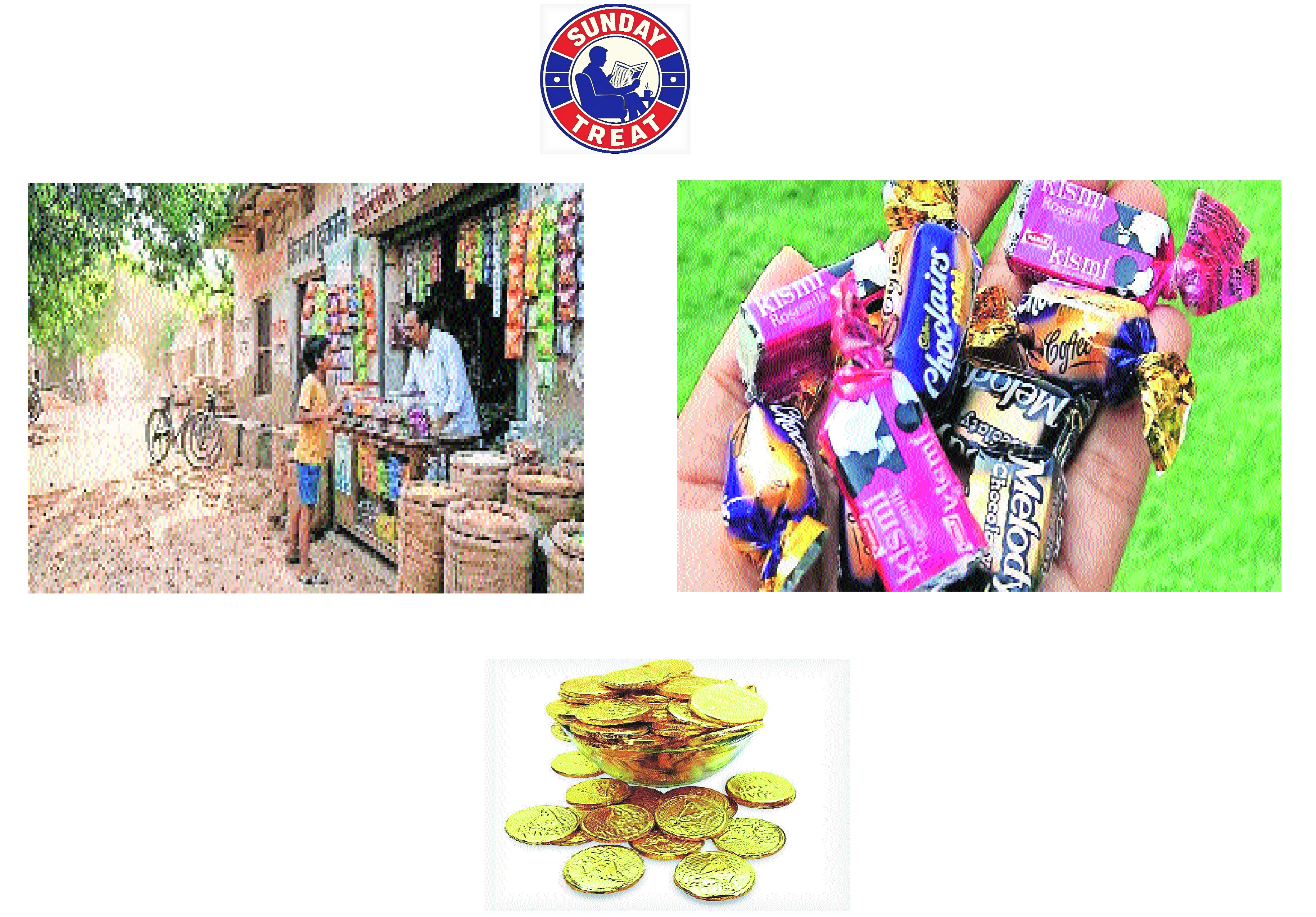
There was a time when a rupee jingling in a child’s pocket was enough to make the day special. A visit to neighbourhood kirana shop meant choosing from glass jars filled with colourful Santra Golis, picking a Rajmalai chocolate, buying a Parle Kismi or Mango Bite, or savouring tangy taste of Kaccha Mango and Aam Pachak. A Parle Rola Cola, a handful of Borkut balls or a Phantom cigarette candy could make an ordinary afternoon memorable.
Some treats cost just Re 1 or
even less, but the happiness they brought was priceless. Today, as shelves fill with fancy wrappers and branded chocolates, these childhood favourites are slowly fading.
For those who grew up in 1970s, 1980s and 1990s, these treats were an inseparable part of everyday life. They were shared between friends, bought with pocket money and enjoyed on the way back from school.
Single-piece Soan Papdi and Mysore Pak, sometimes available for Re 1 or less, were enough to satisfy a sweet craving. Doodhmalai, Santra Goli and Rajmalai chocolates had their own admirers, while the familiar flavours of Kismi, Mango Bite and Rola Cola made every small purchase special.
Recalling those days, 62-year-old Ranjeet Shukla says, “For us, chocolates were real bliss. We could get four chocolates for just Re 1. Finding chocolates with that kind of taste, flavour and variety today is almost impossible. Those were simple
treats, but they had something special about them.”
His childhood memories extend beyond sweet shops. Collecting almonds from trees and carefully cracking their shells without damaging the kernel was another little pleasure. “We would collect almonds, break their shells carefully and make sure the actual nut inside did not get damaged. Even such small things gave us so much happiness. We also had single-piece Soan Papdi and Mysore Pak for Re 1 or even less. Everything had its own charm,” he recalls.
Changing preferences among younger generations, however, have pushed some traditional favourites into the background. According to 58-year-old Pramod Dixit, today’s generation, particularly Gen Z, is more attracted to products with appealing packaging than to their actual taste.
“This generation is more attracted to fancy packaging and products that look appealing to the eye and, of course, to the camera.
If something looks good, they want to post it on social media. But somewhere, the taste and original flavours are missing. When there is little demand for these traditional sweets and candies, their availability in the market also declines,” he states.
Dixit adds that although Santra Goli and Rajmalai are still available at some places, their original taste is difficult to find.
“These were products with simple and original flavours. They may still be found in the market, but that old taste is missing.”
Perhaps that is what makes these treats special even today. They were never about elaborate packaging or expensive brands, but a few coins, a familiar shopkeeper and the joy of sharing something sweet with
friends.
The wrappers may have changed, but the mention of a Santra Goli,
Kismi or Phantom candy is still enough to take many back to a childhood that no fancy chocolate can quite recreate.
A visit to
neighbourhood kirana shop meant choosing from glass jars filled with colourful Santra Golis, picking a Rajmalai chocolate, buying a Parle Kismi or Mango Bite, or
savouring tangy taste of Kaccha Mango and Aam Pachak. A Parle Rola Cola, a handful of Borkut balls or a Phantom cigarette
candy could make an ordinary afternoon memorable
n