impact-of-sustained-conservation-efforts-indian-bison-population-improves-significantly-in-btr
| Date :04-Nov-2026 |
Staff Reporter :
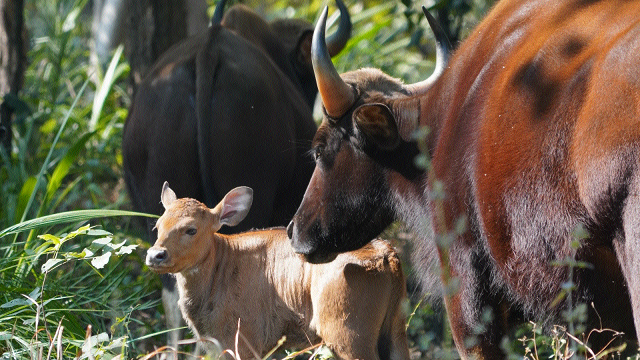
In a remarkable conservation success story, the gaur (Indian bison), once locally extinct in Bandhavgarh Tiger Reserve, has made a strong comeback, with its population now estimated at 220–240. The achievement is the result of more than 15 years of sustained conservation efforts, scientific management and continuous monitoring by the Madhya Pradesh Forest Department.
There was a time when large herds of gaur were a common sight in Bandhavgarh’s forests. However, their population gradually declined to fewer than 40, and by 1998, the species had become locally extinct in the reserve. Its presence was reduced to memories of the past.
Field Director of Bandhavgarh Tiger Reserve, Dr Anupam Sahay informed that a fresh chapter in conservation began in 2011-12, when around 50 gaur were brought from Kanha Tiger Reserve and reintroduced into Bandhavgarh. Initially, the relocation posed several challenges, but the animals gradually adapted to the forest environment and suitable habitat. They began breeding, and the birth of calves marked the establishment of a new generation in the reserve. Their population subsequently increased to around 170.
To further strengthen the population and improve its genetic diversity, the Madhya Pradesh Forest Department, in collaboration with the Wildlife Institute of India (WII), initiated another relocation programme. Under this initiative, 50 additional gaur were brought from Satpura Tiger Reserve, 23 in February
2025 and 27 in January 2026, completing the planned relocation target.
Today, herds of approximately 220–240 gaur roam the forests of Bandhavgarh. Their presence is also becoming noticeable in adjoining forest areas of the Umaria Forest Division, indicating a gradual expansion beyond the reserve. Dr Sahay added that the return
of gaur is significant not merely in terms of population recovery but also for restoring the ecological balance of the forest. As one of the largest herbivores, gaur plays an important role in shaping vegetation, maintaining grasslands and supporting nutrient cycles.
They are also an important part of the food chain for large carnivores, including tigers.
The success of the programme reflects the dedicated efforts of Bandhavgarh’s forest personnel, who have been monitoring and caring for the animals round the clock for years. The Wildlife Institute of India provided technical support, while trained wildlife health experts looked after their health and well-being. The growing gaur population has brought considerable satisfaction to conservationists and forest officials. A species that had disappeared from Bandhavgarh’s forests has not only returned but is now thriving and establishing new generations. It is a testament to how sustained conservation efforts can restore the lost natural heritage of a forest.