Deaths of 3 leopard cubs in TTC raise concerns
Date :05-Nov-2026
Staff Reporter
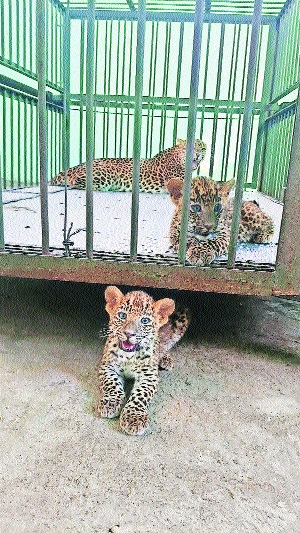
The deaths of three cubs of a rescued leopard in Transit Treatment Centre (TTC) have raised questions over the working pattern of Forest Department.
As per the sources, despite repeated written recommendations by veterinary officials to release the mother and three cubs into their natural habitat, the department failed to take a decision. Eventually, all three cubs, born on March 27 this year and were fit to release, died one by one within two months. The shocking incident has raised serious questions about why the delay made by the department even after getting the certificate of fit to release by veterinary officials.
On January 19, 2026, a female leopard was captured from Tiroda in Gondia district for killing livestock and venturing close to human settlements. Thereafter, the leopard was shifted to TTC in Nagpur where it was gone under treatment. During treatment, it was revealed that the leopard was pregnant. On March 27, she gave birth to three cubs. After proper examination, the veterinary official issued fit to release certificate for mother leopard and all the three cubs.
As per the guidelines and Standard Operating Procedures (SOPs) for Transit
Treatment Centres (TTCs), a TTC does not fall under the definition of a “Zoo” under Section 2(39) of the Wildlife (Protection) Act, 1972, and therefore is not governed directly as a zoo under Central Zoo Authority (CZA) rules. Whereas, TTCs are intended strictly for short-term stabilisation, medical treatment, and temporary holding rather than permanent captivity of wild animals.
Rescued or treated animals are generally slated for release back into the wild, or transfer to a zoo or rescue centre, ideally within 30 days, provided a competent veterinarian certifies them as fit and uninjured (with a certificate valid for up to 15 days). In this case, the leopard and her cubs were residing in TTC since last more than eight months which is against the Wildlife (Protection) Act, 1972.
As per the information, the enclosure of the leopard had CCTV but it was not working from some time. Therefore, the monitoring of the wild animals was not possible there.
As per the sources, the first fit to release letter was issued on August 3. However, no action was taken by the department. On September 1, one of the cubs died. Subsequently, another letter was issued on September 4, recommending the release of the mother leopard along with the remaining two cubs. Despite this, no decision was taken.
On September 29, the second cub also died. In an attempt to prevent the sudden death of the last surviving cub, veterinary officials, through a letter dated October 13, once again recommended the immediate release of the mother leopard along with her remaining cub into their natural habitat. However, the third cub also died on October 31.
While asked about the cause of death of all the three cubs in TTC to Range Forest Officer Prakash Bhadange, he claimed that all the three cubs died naturally but the exact cause of death is yet unknown. However, when ‘The Hitavada’ tried to contact Yash Kale, Assistant Conservator of Forest about the incident, he didn’t pick the phone. The incident has raised demand for an inquiry, fixing accountability and strict action against the officials concerned.