Five-day rituals, sumptuous faral define Diwali in Maharashtrian homes
| Date :05-Nov-2026 |
By Sayli Watkar
For Maharashtrian households, Diwali is not confined to just lighting of lamps or worship of Goddess Lakshmi. The festival unfolds through a series of age-old rituals, family customs and culinary traditions that begin days before the main celebrations and continue until Bhau Beej. The celebrations begin with Vasu Baras, when cows and their calves are worshipped as symbols of nourishment and prosperity. In many households, tradition of making ‘Pandav’ also begins from this day.
Small formations made from cow dung are placed in the courtyard or near main entrance and worshipped daily for five days, until Balipratipada.
The custom reflects importance of cattle in agrarian life. Cow is then worshipped as a mark of gratitude and reverence. This is followed by Dhantrayodashi, when families offer prayers for health and wealth. Purchasing gold, silver or new utensils is also considered auspicious on this day. Narak Chaturdashi is among the most distinctive observances, with families waking up before sunrise for traditional abhyanga snan. Sesame oil is applied to the body, followed by a bath using scented ubtan. In some households, a bitter fruit known as karit is crushed under the left foot after bath, symbolising Lord Krishna’s defeat of Narakasura.
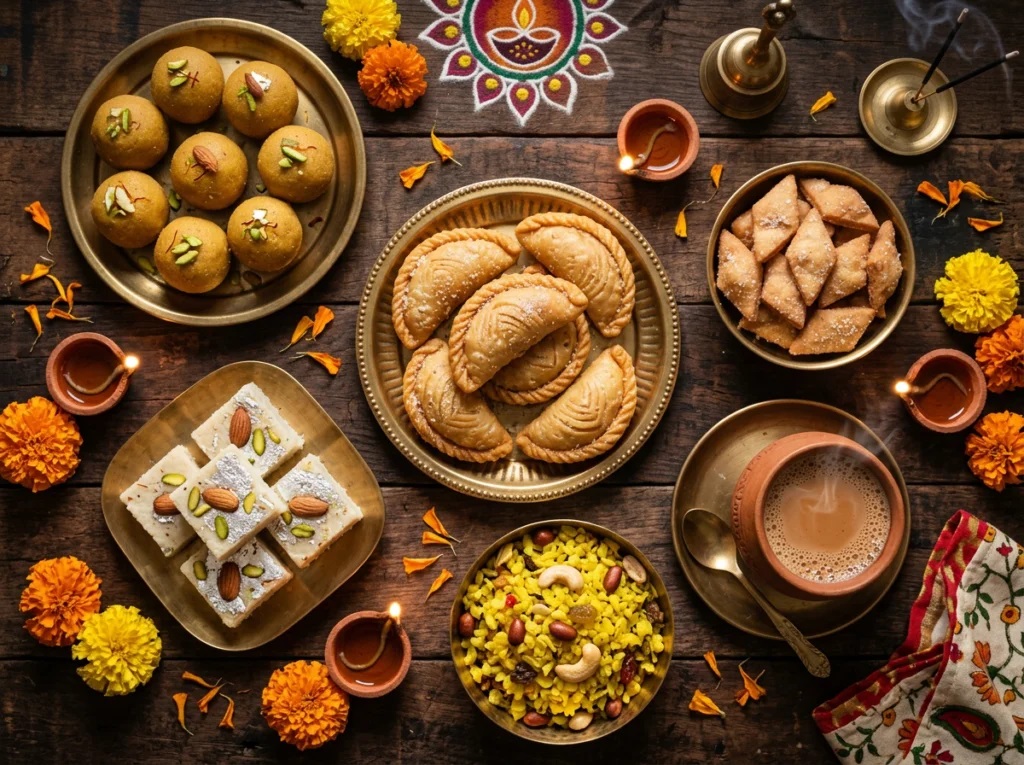
Food is central to the celebrations, particularly preparation of faral. Chakli, shankarpali, karanji, anarse, chivda, ladoos and shev are among traditional delicacies. Preparations often begin days in advance.
Faral is also packed into boxes and distributed among relatives, neighbours and friends as a Diwali gift, keeping alive the tradition of sharing homemade food. Though a common item in each household, every family has preserved its own taste. Lakshmi Pujan is observed on Amavasya, when families worship Goddess Lakshmi and Lord Ganesha for prosperity and well-being.
Traders perform Vahi Pujan, worshipping account books and business-related items for a prosperous year ahead. The celebrations continue with Diwali Padwa, also known as Balipratipada, which is associated with King Bali and celebrates bond between husband and wife. Wives traditionally perform aukshan of their husbands, while husbands give them gifts.
The festivities conclude with
Bhau Beej, when sisters pray for their brothers’ well-being and
prosperity.