Long-term conservation efforts ensure successful return of Barasinghas to BTR
| Date :05-Nov-2026 |
Staff Reporter :
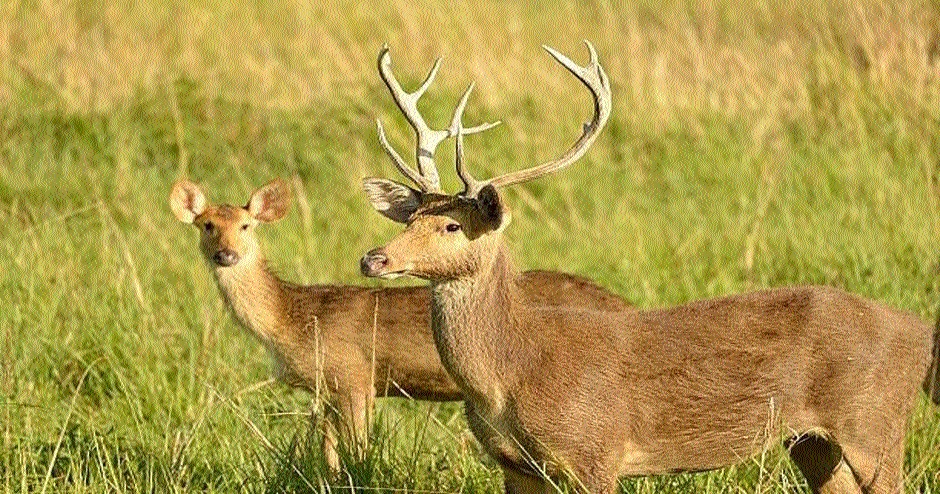
In a major achievement for wildlife conservation in Madhya Pradesh, the hard-ground Barasingha, the State’s animal, has made a comeback in Bandhavgarh Tiger Reserve after nearly a century. Once believed to have disappeared from the region, the rare deer is now establishing a new population through scientific wildlife management and sustained conservation efforts.
According to historical accounts and local references, Barasinghas were found in Bandhavgarh nearly 100 years ago but gradually disappeared. However, no authenticated records establish the exact period or reasons for their disappearance.
Earlier, the hard-ground barasingha was naturally found only in Kanha Tiger Reserve. Successful conservation initiatives have now helped establish its populations in Van Vihar National Park, Bhopal, Satpura Tiger Reserve and Bandhavgarh.
Field Director of Bandhavgarh Tiger Reserve, Dr Anupam Sahay informed that before its reintroduction, Madhya Pradesh Forest Department, with technical support from the Madhya Pradesh State Forest Research Institute, Jabalpur, conducted a Population Habitat Viability Analysis (PHVA). The study assessed the suitability of Bandhavgarh’s grasslands, particularly in the Magadhi range, in terms of vegetation, food, water availability and long-term survival prospects.
The relocation programme began on March 26, 2023, when 37 barasinghas were shifted from Kanha to Bandhavgarh. The animals were captured using specially designed enclosures called bomas and transported in dedicated wildlife vehicles under the supervision of forest officials and veterinary experts.
Dr Sahay added that in March 2024, another 11 Barasinghas, including three males and eight females, were relocated.
Thus, a total of 48 animals were brought to Bandhavgarh in
two phases.
After relocation, the animals were kept in a secure enclosure to help them adapt to the new environment. Their health, feeding habits, behaviour and breeding activities were regularly monitored. The conservation efforts have yielded encouraging results, with the population increasing to 56 in 2025 and reaching 65 by May 2026, indicating successful adaptation and natural breeding.
Apart from Magadhi, the grasslands of Mili and Jogi Wada have also been identified as suitable habitats. Experts have recommended connecting these grasslands, developing wetlands and improving food and water availability to support the growing population.
The project also faced challenges in protecting the enclosure from wild elephants, which have been moving through Bandhavgarh’s forests since 2018.
The Forest Department strengthened the outer fencing and installed solar-powered fencing to prevent elephant
entry. Special snake- and python-resistant fencing was also installed to protect barasinghas, particularly newborn calves. Regular health checks, population monitoring and maintenance of security arrangements continue to be important components of the programme.
Forest officials believe that establishing an independent barasingha population in Bandhavgarh will strengthen the species' long-term survival and reduce its dependence on a single habitat. The successful return of the State animal marks an important milestone in Madhya Pradesh’s wildlife conservation efforts and demonstrates how scientific planning, habitat development and sustained protection can help restore lost natural heritage.