From childhood excitement to a fading tradition, Diwali Gad-Kille await revival
| Date :06-Nov-2026 |
By Sayli Watkar :
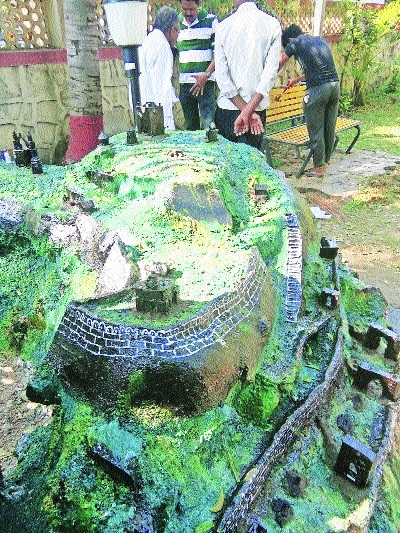
For generations, building miniature forts during Diwali has been a way for children in Maharashtra to connect with the region’s history. Using mud, stones and other materials, children recreate the forts associated with Chhatrapati Shivaji Bhosle Maharaj, turning a festive activity into an opportunity to learn about the legacy of Swarajya. While the tradition has gradually lost ground in several neighbourhoods, enthusiasts are working to bring it back by making fort-building an engaging way of teaching history.
Atul Guru, who has been working towards creating awareness about forts since the 1990s, believes that the practice is an old cultural tradition and not merely a recreational activity. Small replicas of forts have also been made in different parts of the country, including Maharashtra and Rajasthan. He points out that the forts associated with Chhatrapati Shivaji Maharaj represent an important
chapter in the region’s history and that introducing children to them through miniature models can make that history more accessible.
Through his organisation, Durga Pratishthan, Guru has been promoting the initiative ‘Kille Banwa, Itihas Jagwa’ (Build forts, keep history alive).
He has conducted more than 500 workshops in schools and cities including Pune, Mumbai, Nagpur, Amravati, Wardha and Solapur. Over the years, his work has included building forts of different sizes, from one-foot models to structures measuring seventy-five feet, while encouraging children to understand their historical and architectural features.
Guru believes that the younger generation needs to look at forts beyond their conventional association with kings, battles and history. A single fort, he says, can offer insights into more than 150 subjects, including structural design, architecture, construction, inscriptions, sculpture, military planning and ecology.
Its gates, windows, arches and other features reveal different aspects of design, while its vegetation and wildlife offer an understanding of the surrounding natural environment. He is currently pursuing PhD research on forts and their multiple dimensions.
The tradition is also finding new interest among children discovering it through digital platforms. Thirteen-year-old Parth Gujar said he learnt about Gad-kille through reels and on-line videos. “I did not know much about gad-kille earlier. I explored it through reels and videos on the internet and learnt that building forts during Diwali is an old tradition,” he said. He is attempting to build one for the first time this year and has started collecting soil and other materials.
For Guru, the message to Gen Z is to change the way they look at forts and recognise them as a combination of history, science, architecture and nature. Through the tradition of building miniature forts, he hopes to encourage the
next generation to explore this heritage beyond textbooks.