From Kali Puja to Bhoot Chaturdashi, Bengali Diwali follows distinct traditions
| Date :06-Nov-2026 |
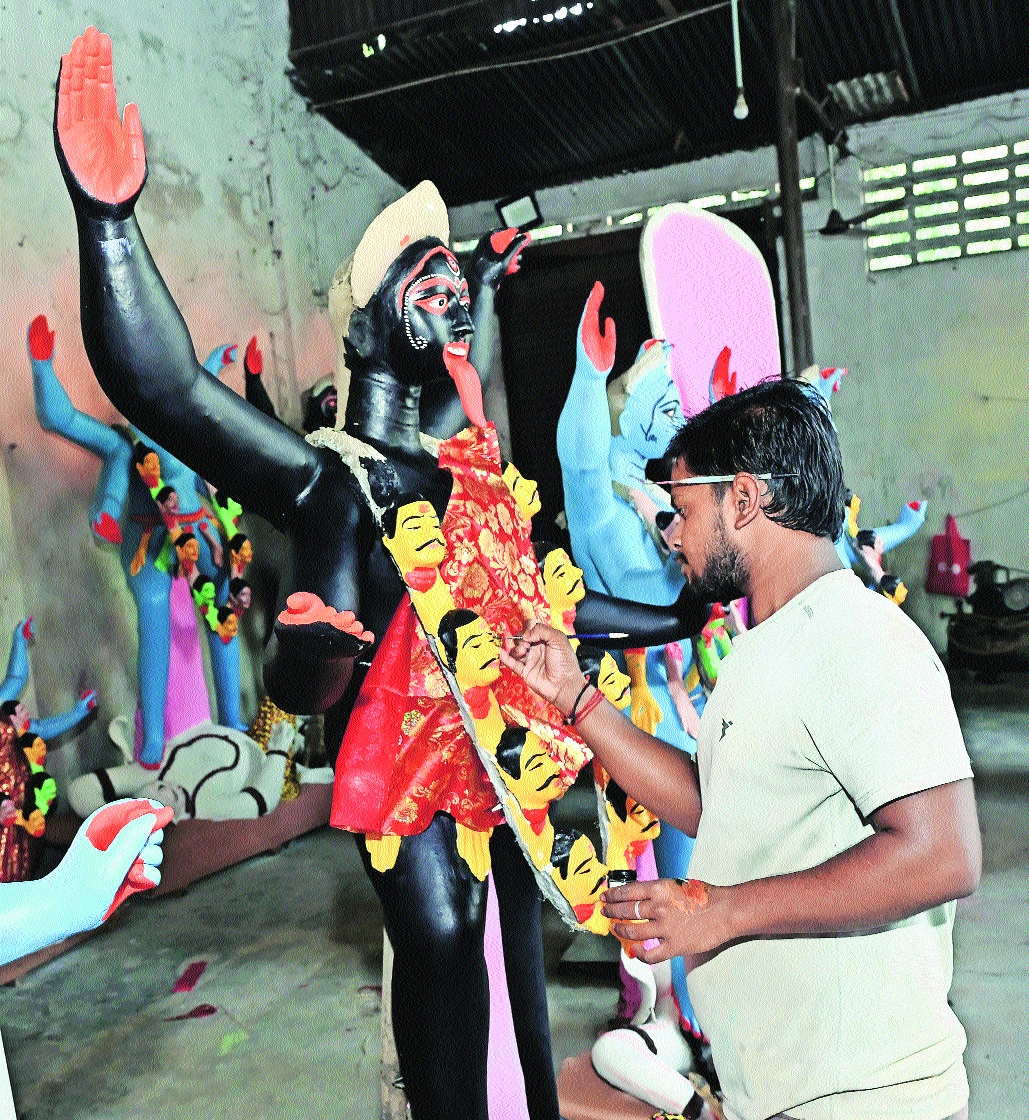
An artist giving finishing touches to an idol of Goddess Kali ahead of the
divine night. (Pic by Anil Futane)
By Kabir Mahajan :
For Bengali households, Diwali is marked by distinctive set of religious rituals and customs, with Goddess Kali taking centre stage on the night of the new moon. While Lakshmi Puja is the central observance in many parts of the country, Bengali families traditionally celebrate the occasion as Kali Puja, also known as Shyama Puja. The festival brings together night-long worship, ancestral traditions, traditional food and family customs that reflect Bengal’s cultural identity.
One of the significant observances preceding Kali Puja is Bhoot Chaturdashi, celebrated on the 14th lunar day before the new moon. A distinctive tradition associated with the day is the lighting of 14 earthen lamps, known as ‘Choddo Prodip’, in different corners of the house.
The lamps are traditionally associated with remembering the ancestors of 14 generations and are believed to guide their spirits home. Families also prepare ‘Choddo Shaak’, a dish made using 14 varieties of leafy greens, as part of
the observance.
The main celebration takes place on Kartik Amavasya, when Goddess Kali is worshipped during the night, often around midnight. Also called Shyama Puja, the ritual is performed at homes and community pandals. Devotees offer red hibiscus flowers, sweets, fruits and other traditional offerings to the Goddess, seeking protection and the strength to overcome evil. Unlike the daytime rituals associated with several other festivals, Kali Puja is marked by night-long prayers and devotional observances.
The festive atmosphere is also reflected in household decorations and traditional offerings. Homes are illuminated with earthen lamps and candles, while alpona, decorative patterns traditionally made using rice paste, are drawn at entrances and Puja spaces.
Devotional songs dedicated to Goddess Kali, known as Shyama Sangeet, are also associated with the occasion. Khichuri (Rice and Dal recipe), sweets and other offerings form part of the bhog prepared for the Goddess, although the menu varies across families and traditions.
The celebrations extend beyond the night of Kali Puja with Bhai Phonta, the Bengali observance of the brother-sister bond. Sisters apply a ceremonial mark of sandalwood paste or other traditional ingredients on their brothers foreheads, pray for their long life and well-being, and share meals and gifts.
To enhance festive bonds during Diwali, families visit their relatives and neighbours to share faral. Through these rituals, Bengali Diwali brings together devotion to Goddess Kali, remembrance of
ancestors and family relationships, preserving customs that continue to shape the community’s festive celebrations across generations.