When marble dust becomes a festive canvas
| Date :07-Nov-2026 |
By Rohit Pawar :
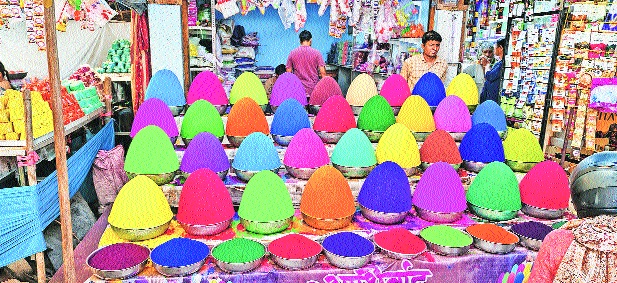
As Diwali approaches, rangoli colours, stencils and stickers fill city markets. Behind the changing designs, however, traditional sellers face rising costs. At Sakkardara, Wadalkar family has run a rangoli business for nearly five decades. Kuldip Wadalkar said its powder is made from marble dust sourced from Jabalpur, sieved into different particle sizes and coloured at the shop.
The family produces nearly 40 shades in batches of around 40 kg. Fine varieties are coloured by hand using RB-grade colour and kerosene. Each batch takes 30 to 45 minutes of preparation. The process can leave hands sore, though Wadalkar is accustomed to it after decades in the trade. Coarse varieties need no kerosene, while customised shades are made for rangoli artists. “Fine, dark colours are popular among women and young girls,” a member of Wadalkar family informed.
‘Poster rangoli’, used for intricate designs and lifelike portraits, costs Rs 40 per kg. White rangoli costs Rs 10 per kg, while coarse coloured varieties cost Rs 40.
At the Jagdamba Mata premises near Koradi Temple, trader Jatin Kumar said sticker rangolis cost Rs 20 to Rs 100 and hard-plastic stickers Rs 30 to Rs 120. Ordinary stencils cost Rs 20 to Rs 100; premium wooden designs start at Rs 300.
Wadalkar said rising costs had caused losses since last year. Transporting a 40 kg bag now costs Rs 200, up from Rs 140. Plastic bags have risen from Rs 100 to over Rs 150 per kg. He has kept prices unchanged due to competition, accepting lower margins rather than burdening customers.
The colours may change, but the craft survives through sellers determined to keep this Diwali tradition affordable.