MSRTC’s Nagpur Division Depot to get 160 Rajmata Jijau buses
Date :10-Feb-2026
By Rohit Pawar :
New diesel units are BS VI compliant and provide depth to operations, said local officials
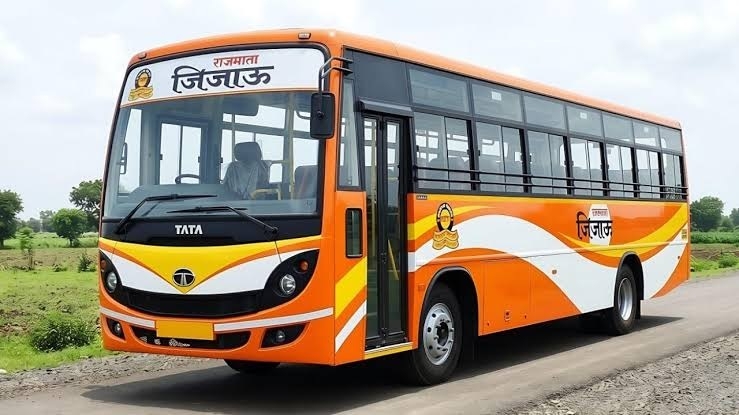
Maharashtra State Road Transport Corporation (MSRTC) Nagpur Division is about to get 160 newly-inducted Rajmata Jijau buses for its 8 depots that would help deepen its network in the region. Transport Minister and Chairman, MSRTC, Pratap Sarnaik, unveiled the new fleet of BS6-compliant buses on Sunday.
The saffron-and-white coloured buses will gradually hit roads across the State from the month of March, serving as moving symbols of Maharashtra’s pride and tradition.
The bus, named Rajmata Jijau as a tribute to Chhatrapati Shivaji Maharaj’s mother, will have an increased capacity of 55 seats compared to the previous 40 in the current ‘Lalpari’ buses as they will have 3x2 setup of seating. Sarnaik, during the launching programme said, Chhatrapati Shivaji Maharaj is a revered figure in Maharashtra, and the inspiration behind his Swarajya vision came from Rajmata Jijau. These buses honour her legacy.”
He noted that ST, previously had similarly named the buses Shivneri, Shivshahi, Shivai, Yashwanti, and Hirkani.
Vinod Chaware, Divisional Controller, MSRTC, Nagpur, informed ‘The Hitavada’ that, the new buses will increase the passenger-carrying efficiency and will also comply with the modern emission norms. Mahendrakumar Neware, Mechanical Engineer (Operation), MSRTC, Nagpur said, “These new Tata/Ashok Leyland buses will have the same chassis length of 11 metres as the previous ones and will systematically replace the aging fleet of the old Lalpari buses.”
The induction of Diesel buses in fact marks a shift away from the all electric programme undertaken by MSRTC few years back. Asked about the same, Chaware explained that the Management is going with the goal of converting existing fleet into 30 per cent running on green energy.
The new diesel engines are quite fuel-efficient and compliant with latest BS VI norms prescribed by Union Transport Ministry. So more or less they are comparable with e-buses.
Further, as per officials of MSRTC, running new-age diesel buses is far more beneficial compared to e-buses. No doubt e-buses are plying everywhere, but prior to that, the organisation needs to invest heavily in putting in place required infrastructure for them. Means, unlike conventional depots, for e-buses, charging infrastructure is required and this alone consumes much of time and one has to get 132 KV transformer and other required material which blows a big hole in the finances. Compared to that, diesel buses can be maintained at regular depots and their efficient running proves quite economical and current workforce can easily maintain this fleet. So a mix of e-buses and BS VI-complaint diesel buses makes ideal combination for MSRTC as it is concentrating on cutting the losses and making operations profitable. Also, switching back to 3x2 passenger buses means MSRTC can carry more number of passengers with lesser number of vehicles.