MSRTC’s Manav Vikas fleet nearing end of life, no replacement plans yet for units in Nagpur depot
| Date :25-Feb-2026 |
By Rohit Pawar :
- Transport Minister Pratap Sarnaik recently declared induction of 8,300 new buses to strengthen Corporation reach and make a financial turnaround by running more services
- No mention in MSRTC blue print as to replacement for Manav Vikas Mission buses yet at Nagpur Region Depot
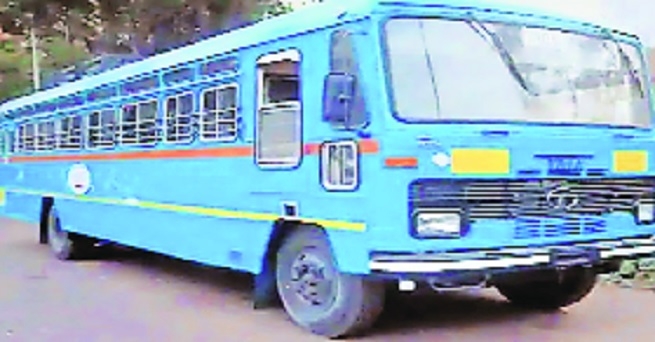
Concern is mounting in Katol and Ramtek area over the future of the Blue coloured Manav Vikas Mission buses operated by the Maharashtra State Road Transport Corporation (MSRTC), as the vehicles are nearing their end of prescribed service life without any formal declaration regarding their replacement. Introduced under the Manav Vikas Mission, the distinct Blue buses are a Maharashtra Government initiative aimed at providing free, safe transportation for rural students, particularly girls, to reduce school dropout rates in underdeveloped districts.
These buses are operated via MSRTC and they have been successful in bridging the distance between villages and high schools, focussing on improving educational access for girls. For over a decade, they have functioned as a vital socio-educational support system across interior routes.
Asked about the operations, Mahendrakumar Neware, Mechanical Engineer Operations (MEO), MSRTC, Nagpur, told ‘The Hitavada’ that, as of now, a total of 14 Manav Vikas buses are currently in operation within the Nagpur depot, seven are stationed at Katol depot and seven at Ramtek depot. All these buses were manufactured in 2012 with aluminium-built bodies.
He also added that Transport norms require such vehicles to be scrapped after 15 years of service, placing their retirement window between 2027 and 2028. Apart from reaching the statutory age limit, the aluminium structures have weakened due to continuous operation on rural and semi-urban roads, making replacement necessary within the next one to two years.
Despite this impending deadline, no depot-specific announcement has yet been made. This comes even as Transport Minister and MSRTC Chairman Pratap Sarnaik has outlined an ambitious state-wide expansion of the Corporation’s fleet. Sarnaik outlined MSRTC plan to induct 8,300 new buses in the first phase this year to strengthen the undertaking financially.
He explained that the Corporation currently spends around Rs 34.35 crore daily while earning roughly Rs 33 crore, resulting in a deficit of Rs 1.15 crore per day. The shortage of buses, he stated, is the primary obstacle to increasing revenue, as more buses would carry more passengers and automatically improve income.
Under the Corporation’s long-term policy, there is a plan to procure 20,000 to 25,000 buses over the next few years, with in-principle approval already granted by the State Government. Of the 8,300 buses planned in the first phase, about 3,000 units in 3x2’ seating configuration Rajmata Jijau’ buses, will be inducted in stages from March. The tender process for 5,000 standard buses is in its final stage, while 100 midi buses are proposed for remote and tribal areas and 200 modern buses will be introduced to compete with private transport. MSRTC aims to eventually achieve a daily ridership target of 70 to 75 lakh passengers.
However, while these broader plans signal a major overhaul of Maharashtra’s public transport system, their impact has yet to reach Katol and Ramtek. In contrast, the Gadchiroli depot has recently received 55 new Ashok Leyland BS6 buses manufactured by Ashok Leyland under the same Manav Vikas framework, strengthening connectivity in its tribal regions. The Nagpur Division, however, has not received any new buses under this initiative so far.
With the operational life span of the existing blue buses steadily nearing its end, commuters particularly students from rural backgrounds remain dependent on services whose replacement timeline is still uncertain. Timely planning and allocation will be crucial to prevent disruption to a scheme that has long ensured access to education for under-developed communities.