Rahul Gandhi slams India-US trade deal as betrayal at Kisan Mahachaupal
| Date :25-Feb-2026 |
Staff Reporter :
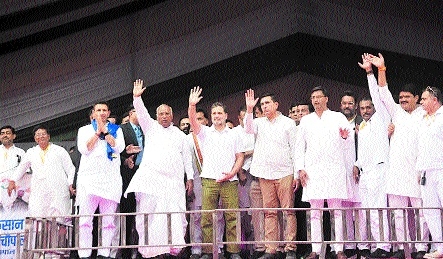
In a massive political show of strength, Leader of Opposition in the Lok Sabha, Rahul Gandhi and Congress National President Mallikarjun Kharge arrived in Bhopal on Tuesday to lead the ‘Kisan Mahachaupal.’
Addressing a sea of farmers at Atal Path, the leaders launched a nationwide protest against the recently signed India-US interim trade agreement. While Mallikarjun Kharge opened the session by thanking the massive gathering and launching a scathing attack on the Prime Minister’s policies, Rahul Gandhi centered his speech on the specific economic and security “betrayals” he claims the country is currently facing.
Rahul Gandhi levelled serious allegations against the Central Government regarding the India-US trade deal, asserting that the agreement effectively hands over Indian data to foreign interests while crippling local industries. He questioned the logic behind the deal, pointing out that while the US President reportedly demands that India purchase Rs 9 lakh crore worth of American goods annually for the next five years, the Indian government is offering zero-percent tax on US cotton imports.
Gandhi warned that this would decimate the domestic textile industry and leave Indian farmers unable to compete, as the deal offers no reciprocal guarantees for Indian exports.
Turning his focus to national security and parliamentary dignity, Gandhi claimed that for the first time in Indian history, the Leader of the Opposition was being silenced in the Lok Sabha. He shared a startling account involving former Army Chief General Manoj Mukund Naravane’s memoir, alleging that
during a Chinese incursion, the government left the Army leadership without clear orders. Gandhi stated that despite the Army Chief seeking urgent instructions from the Defence Minister and the Prime Minister while Chinese tanks were approaching the boundary, he was met with silence. He emphasised that the decision to engage in conflict rests with the Prime Minister, yet the government “hid in their rooms,” leaving the military to fend for itself. The event, organised under tight security and overseen by State Congress President Jitu Patwari, served as the starting point for a broader agitation. Congress leaders emphasised that the trade deal would cause a crash in market prices for essential Madhya Pradesh crops such as soybean, cotton, maize, and mustard. By the end of the Mahachaupal, the Congress leadership made it clear that they intend to take this fight from the streets of Bhopal to every rural pocket of the country, framing the trade agreement as a direct threat to the sovereignty and livelihood of the Indian farmer.