Organic waste disposal threatening Futala Lake’s ecological balance
| Date :19-Mar-2026 |
By Reema Mewar :
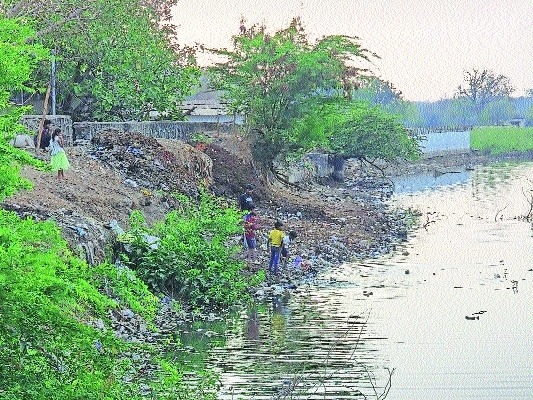
Cow dung dumped into the lake creates an environment ideal for soil formation which causes growth of plants, algae leading to drop in natural oxygen levels in the water. This ultimately results in a slow death of the water body
Once one of Nagpur’s most prominent public spaces, Futala Lake is in a state of ecological stress. Environmental concerns surrounding the lake have been growing as pollution, waste dumping and inadequate maintenance continue to affect the water body.
Waste-dumping and organic pollution disturb ecology
One of the major issues affecting Futala Lake is the dumping of organic and household waste from nearby settlements. Cow dung is frequently disposed of near or directly into the lake.
Dr Manoj Patil, Professor, Department of Animal Reproduction, Gynecology and Obstetrics, Nagpur Veterinary College, explained that “Organic waste such as cow dung significantly alters the lake’s ecological balance. Cow dung is rich in nitrogen and phosphorous, which promote soil formation. The accumulation of such material encourages the growth of plants, algae, and other vegetation within the lake.”
Kaustav Chatterjee, founder, Green Vigil Foundation,
elaborated, “While vegetation growth may appear harmless initially, it leads to a reduction in oxygen levels in the water.
As oxygen levels decline, aquatic organisms such as fish and other life forms struggle to survive. Cow dung can contain several pathogens that contaminate the water and increase the risk of disease among aquatic species, gradually weakening the lake’s ecosystem.”
Sewage inflow and stagnant water worsen conditions
Experts say the problem is compounded by sewage inflow and the stagnant nature of the lake. Futala is a still water body, meaning there is little natural movement or circulation of water except during the monsoon season when rainfall temporarily replenishes it.
This lack of water exchange means that pollutants remain trapped in the lake for long periods. Waste material settles and decomposes within
the water, releasing foul odour and further degrading water quality.
During the summer months, the problem becomes more noticeable as water levels fall due to evaporation and the concentration of pollutants increases.
A local shopkeeper commented, “I pass the lake every day and often notice a strong, rancid smell from the water during summer because of sewage and accumulated waste.”
Prachi Mahurkar, an ecologist, said “It would be inaccurate to blame any single group for the lake’s deterioration. Multiple human activities contribute to the problem, including sewage dumping, pesticide residue, and other anthropological activities.”
As Futala Lake continues to face mounting environmental pressure, residents and experts alike stress that coordinated efforts, stricter monitoring and long-term management strategies are essential if the lake is to be preserved for future generations.