Nature’s Fury: Rain, hail put farmers in big trouble
| Date :21-Mar-2026 |
Staff Reporter :
For the farmers of Madhya Pradesh, what should have been a week of golden harvests and celebration has turned into a desperate, high-stakes race against the elements. As a powerful Western Disturbance triggers unseasonal rain, lightning and hailstorms across the State, the agricultural heartland is gripped by a crisis that threatens to derail an entire year of labour and investment.
The timing of this atmospheric instability, hitting during the absolute peak harvest for wheat, pulses and mustard, has plunged the farming community into a state of panic.
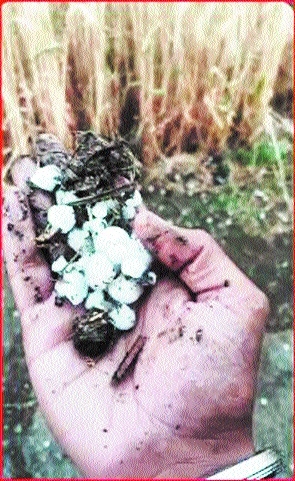
In Damoh, where several rural belts were recently lashed by rain and heavy hailstones, the sense of despair is visible. One local farmer described the situation as ‘shattering’, noting that the sudden icy downpour and 12.0 mm of rainfall have left those with standing crops in a state of mourning, as hail can physically destroy ripening grains in minutes. In Shivpuri, the fear is equally palpable. A local farmer shared that their entire wheat crop remains in the field, vulnerable and unharvested. “Even a small amount of rain right now can destroy the crop,” they explained. The crisis is compounded by high-velocity winds, which reached a staggering 74 km/h in nearby
Agar, causing lodging”.
When heavy stalks are bent flat to the ground, they become nearly impossible for machines to cut, often leading to the crop rotting where it lies. This desperation has created a secondary economic burden, the harvester crisis. Farmers who do not own their own equipment are being forced to pay exorbitant rental charges to those who do, as everyone scrambles to secure a machine before the next cloudburst. In this atmosphere of panic, rental rates have spiked, adding a financial weight to an already precarious situation. In Narmadapuram division, which saw significant moisture, the concern is both visible and invisible. A local grower pointed out that moisture at this stage leads to lustre loss, the fading of the wheat’s natural golden shine, and a reduction in grain size. Even for those who have managed to harvest, the battle isn’t over. They must now find ways to protect heaps of grain from moisture, as damp produce is a magnet for rot and pests like Mahau, this pest can attack the crop in this situation and that can lead to destruction of the crop. Ultimately, the fear at the mandi remains the biggest hurdle. Farmers worry that discoloured or damp grain will be rejected or undervalued by traders, leaving them unable to recover their costs. With more storms expected and another Western Disturbance looming on March 26, the State’s farmers are standing at a crossroads, praying for a break in the weather to save what remains of their livelihood.