READERS’ RESPONSE Who killed Nagpur’s lakes? The answer must lead to action
| Date :21-Mar-2026 |
By Dr Sameer Manapure :
The provocative question raised by Vijay Phanshikar Sir —’Who gobbled up our lakes? Who is the real sinner?’—demands not just reflection, but urgent action in Nagpur. While the article rightly points to collective failure, the time has come to move beyond guilt and focus on solutions.
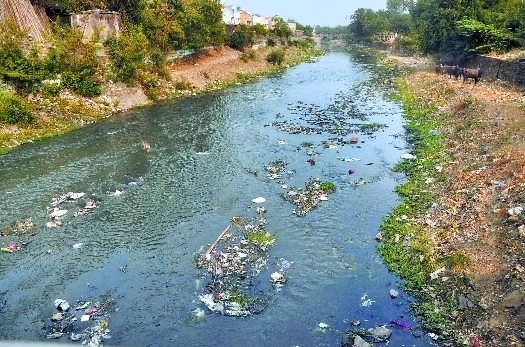
Nagpur’s lakes are disappearing at an alarming rate. Pandhrabodi, Binaki Mangalwari, Naik Talao, and Lendi are on the brink of extinction, while Dobhi Talao and Sanjay Nagar Talao have already vanished. This is not sudden—it is the result of decades of neglect, encroachments, and flawed urban planning. The city has repeatedly mistaken beautification for rejuvenation, investing in tiles, pathways, and lighting, while ignoring the fundamental science of water conservation.
A lake is not a decorative feature; it is a living hydrological system. Without protecting catchment areas, stopping sewage inflow, and ensuring sustainable recharge, no beautification effort can save it.
The present crisis stems from three core failures: unchecked encroachments, loss of natural inflow channels, and lack of scientific desilting.
Immediate steps must focus on stopping further damage. Authorities must legally demarcate lake boundaries and remove encroachments without delay. Scientific desilting is essential to restore depth and storage capacity, ensuring long-term water retention rather than temporary visual improvement. At the same time, untreated sewage inflow must be completely stopped and diverted to decentralised treatment systems before entering lakes.
However, restoration alone is insufficient—sustainability must be ensured. Lakes should be interconnected and supported by treated water inflows to maintain water levels even during drought. Catchment areas must be protected as no-construction zones, supported by green buffers and large-scale rainwater harvesting. If implemented effectively, these measures can enable lakes to retain water for two to three years, even in severe scarcity.
These water bodies can also serve as emergency drinking water reserves.
With natural filtration methods such as constructed wetlands and bio-remediation, water quality can be gradually improved to potable levels. This transforms lakes into strategic assets rather than neglected spaces.
There is also a strong economic case for revival. Lakes can become self-sustaining through eco-tourism—walking tracks, regulated boating, bird habitats, and public spaces. Revenue generated through nominal entry fees, parking, and events can be reinvested into maintenance, reducing dependence on public funds.
Equally critical is governance reform. A dedicated and accountable mechanism under the Nagpur Municipal Corporation must oversee lake management with expert input and citizen participation.
Transparency through public dashboards tracking water levels and pollution can ensure accountability and prevent future neglect.
So, who is the real sinner? The answer is collective, but also specific. Administrative apathy, weak enforcement, flawed planning, and public indifference have all contributed to this crisis. Yet, acknowledging shared responsibility is not enough—clear accountability must follow. Without it, history will repeat itself. Nagpur stands at a critical juncture. It can either continue on the path of symbolic action and irreversible loss, or adopt a scientific and sustainable approach to lake rejuvenation and emerge as a model city. The choice is urgent and unavoidable.
Without water, there is no life—only the slow extinction of everything we call living.
But obviously, the system is responsible!
By Dr Farhat Daud
I fully agree with what Vijay Phanshikar wrote about the sad saga of our lakes. He and ‘The Hitavada’ have been consistently writing about it. YES....the system and people involved in it are the ones responsible for maintaining the city and its resources!! We can’t blame the people everytime for not following rules as there are no rules set at all !!
If the system is in place, people will follow the rules !
It’s human to err and humans will continue to err !
They need a system to keep them in control and a proper administration that gives them the sanity to stay in civil behaviour ! This is no better time than now to prove this as we can see the world crumble under a bad and a uncivilised system !! Definitely, if people are proactive and execute their rights to the basic necessities and to conservation of the city’s heritage, the system will have to bend and do the needful!
If each one does his bit, we definitely will have a better planet that will give back to us the right energies !!
Our lakes have been eaten up by the callous attitude of the makers and the rulers ! The karta dharta who have the full power but either don’t use or misuse it ! Nagpur has 7 lakes at present I suppose, (earlier the number was bigger) yet we only read about this in history of the city ! Nothing that is there to experience or be proud of !!