Weaver-ants season begins, but Vid farmers unaware of qualities
| Date :21-Mar-2026 |
By Simran Shrivastava :
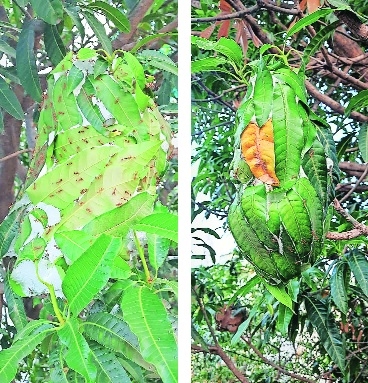
March has arrived, the pre-monsoon period has begun, and so humidity now is optimal for weaver-ants (Oecophylla smaragdina) to start building their nests on the season’s tender leaves. However, farmers across Vidarbha’s mango, cashew, and citrus belts are turning their backs on one of nature’s strongest pest killers. Ironically, the ants are at their busiest and most powerful precisely when mango trees are at their most exposed to pest attack and Vidarbha’s farmers are yet to notice.
The ants are capable of controlling over 50 pest species across more than 12 tropical tree crops, among them mango, cashew, citrus, and guava, the very crops that anchor Vidarbha’s orchard economy.
Weaver-ants
predict monsoon, tool for Central India
Dr Sharyu V Ghonmode Fulzele, Entomologist and Professor at Shri Shivaji Education Society Amravati’s Science College, Congress Nagar, shared her insight on the same. “In Nagpur, the species is no stranger.
It nests most readily on mango trees, followed by guava, cashew, jamun, and citrus trees that grow abundantly across both the city’s parks and Vidarbha’s rural landscape,” she shared. A study named ‘Weaver ants as bioindicator for rainfall: An observation’, by Surjyoti Bagchi, trained its lens specifically on Nagpur district and found that the size, shape, and position of weaver ant nests can reliably predict the coming monsoon, and is a species a living, breathing weather instrument for Central India. In pre-monsoon months of March to May is when these ants build their nests. When the monsoon arrives in June, the ants shift focus.
Rather than building fresh nests, they expand existing ones, which grow larger and more robust during this period.
Rapid urbanisation a threat to
weaver-ants
Yet this presence is under siege. Rapid urbanisation is gnawing away at Nagpur’s tree canopy, fragmenting colonies and cutting them off from each other. “Loss of host trees leads directly to fragmented and smaller colonies. When ant numbers fall, pest populations like fruit flies rise,” Dr Ghonmode explained.
She concluded by sharing an interesting fact. Historically, weaver ants are the oldest recorded use of any insect in agriculture anywhere in the world. Hence, weaver ants remain farmer’s friends since long and wait for awareness.