Tiffin services feel the heat as LPG restrictions tighten supply
Date :23-Mar-2026
By Reema Mewar :
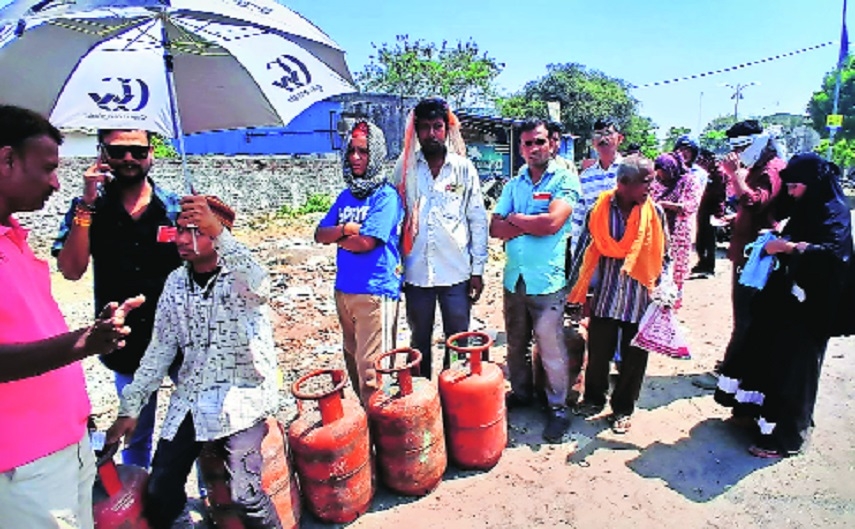
Across several neighbourhoods in the city, small home-run tiffin services and mess kitchens are beginning to feel the pressure of recent restrictions on LPG use. For many of these operators, who often work out of their own kitchens, the unavailability of commercials paired with the introduction of a cap on domestic cylinders has created uncertainty about how long they can continue functioning in the same way.
Caught between customer needs and fuel shortage
Despite the uncertainty, Vandana Kokade, a home-based tiffin provider, says she cannot raise prices or reduce the quantity of the food as customers rely on affordable meals. She is reluctant to pass on the burden at this stage. However, she acknowledges that this is only a temporary hold. She has one unused cylinder as of now, which is expected to last just a couple more weeks.
Kokade said, she is increasingly concerned about how long she can sustain operations without changes, and says that if the situation persists, adjustments to cooking methods, and eventually pricing, may become unavoidable.
Cooking on
firewood/sigris
is impractical
Aparjeet Singh, whose parents run a tiffin service, said that, while they do have one unused cylinder, it will run out in 12-15 days. “After that, we will be forced to rely on chulhas or sigris, but that is not possible. We live in a small flat, and we have no outdoor space to cook on chulhas. To do so in a small, closed space is a fire hazard.”
Number of
cylinders capped, but induction prices not
Geetika Bhandarkar, another tiffin service operator from Mahal, expressed her frustration with authorities.
“I understand that hospitals and other essential services need to be priotised, but our Government is not without fault. If they can put a cap on the number of cylinders per year, they can also put a cap on the price of inductions and other electric cookware. Inductions are being sold for Rs 6,000 to Rs 8,000, when they were available for nearly a third of the price less than a month ago,” she said, adding that if not completely, this can ease at least some of the burden we are under and allow us to keep our businesses afloat,” said Bhandarkar.
Kokade also echoes this sentiment, suggesting that if LPG supply is short, the Government should intervene by subsidising induction stoves or regulating their prices to make them more accessible.