Petrol, diesel supply disrupted in city
| Date :24-Mar-2026 |
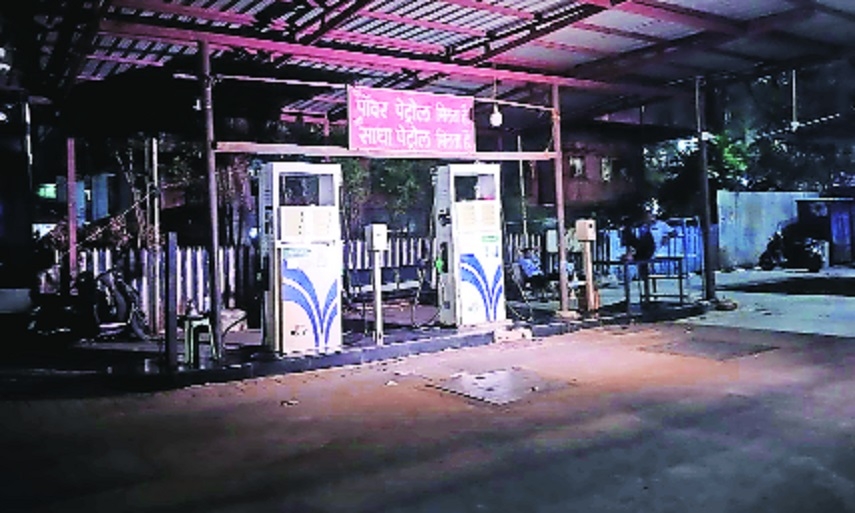
HPCL petrol pump on Wardha Road closed on Monday evening.
Staff Reporter :
The situation will normalise as banks have reopened, payments are being processed, and fuel dispatch has resumed, though panic buying might alone cause supply disruption
Petrol pumps remained shut and supply at several outlets in Nagpur was disrupted over the past two days due to a combination of advance payment rules, bank holidays, technical delays and panic buying. Amit Gupta, President, Federation of Maharashtra Petrol Dealers Association, said the issue is linked to supply timing instead of availability.
Gupta explained that, oil companies have recently shifted all dealers to an advance payment system, under which fuel is released only after payment is received.
“Earlier, dealers were given short-term credit, but this facility has now been withdrawn in phases, with HPCL and BPCL stopping credit from March 12, IOC from March 18, and all three companies ending credit completely, including during bank holidays, from March 21,” he explained. This sudden change disrupted supply as payments could not be processed during the weekend bank closure.
He said, the impact was visible at the retail level, with pumps near Ajni Police Station, Medical Square and Ashok Chowk among those that shut temporarily due to lack of stock. “Panic buying further worsened the situation, as people rushed to fill fuel fearing shortage, quickly exhausting available stock.
Unusual late-night rush was seen at pumps such as Panchsheel Chowk due to public concern,’ he added.
He then said that, technical issues also contributed, as the Hindustan Petroleum system was down, delaying loading operations. Explaining the reason behind the policy change, Gupta said, crude oil prices have risen to around 115 dollars per barrel, putting financial pressure on companies that are buying fuel at higher rates, while selling at controlled prices. He said, companies have therefore moved to a daily payment system to manage cash flow.
Dealers are facing difficulty as they continue to extend credit to long-term customers such as transporters and industries, while companies have stopped giving them credit suddenly.
“Retail fuel prices have not increased, and only bulk consumers are paying higher, market-linked rates,” Gupta clarified.
He concluded that, the situation is now improving as banks have reopened, payments are being processed and fuel dispatch has resumed, though panic buying is still visible in some areas due to fear linked to global tensions and that might alone cause supply disruption.