Plywood, laminate prices shoot up as Gulf war cripples supply chains
| Date :27-Mar-2026 |
Business Reporter :
The market has seen a dramatic increase of about 25 per cent in prices of WPC and PVC boards The price of water proof plywood has also seen a hike of 10-15 per cent
The military conflict between the United States and Iran has severely affected global supply chains due to which various industries across the country are suffering. While the manufacturers are struggling because of a short supply of raw material, dealers and end users are bearing the brunt of soaring prices.
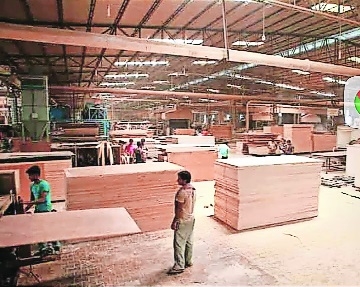
Plywood and laminate industry is one such sector that is facing a severe ‘supply crunch’ of raw material. Its prices have also gone up significantly since the West Asia conflict began.
The market has seen a dramatic increase of about 25 per cent in prices of wood plastic composite (WPC) and polyvinyl chloride (PVC) boards.
The price of water proof plywood has also seen a hike of 10-15 per cent and about 10 per cent hike in the price of laminates.
Yogesh Bang, President of the All Bharat Plywood and Laminates Trade Association, said that the United States - Iran conflict has negatively affected the sector.
Bang said that these materials are heavily composed of plastic polymers, making them hypersensitive to the volatility of the oil and gas markets currently affected by the war. “Plywood and laminate manufacturing is not merely about timber, it requires a sophisticated blend of methanol, resins, and formaldehyde to bond wood layers.
These chemicals are direct derivatives of the petrochemical industry,” he explained, adding that the uncertainty surrounding chemical shipments has forced factories to hike prices.
“The hardship is not limited to the manufacturers. It is not just the manufacturers who are suffering. More than 2,500 dealers of plywood and laminates spread across Vidarbha region are
facing immense hardship,” Bang stated.
Dealers are currently battling two fronts. They are struggling to secure enough inventory due to the supply crunch, while simultaneously facing resistance from customers who are unable to absorb the 25 per cent jump in costs for essential building materials.
For the end consumer, this means that ongoing home renovations and commercial infrastructure projects are likely to see significant budget overruns. Many contractors warn that if the Middle East remains unstable, further price revisions may be inevitable, potentially stalling the real estate recovery in the region.