‘Self-inflicted’ fuel crisis eases: Calm returns to petrol pumps
| Date :27-Mar-2026 |
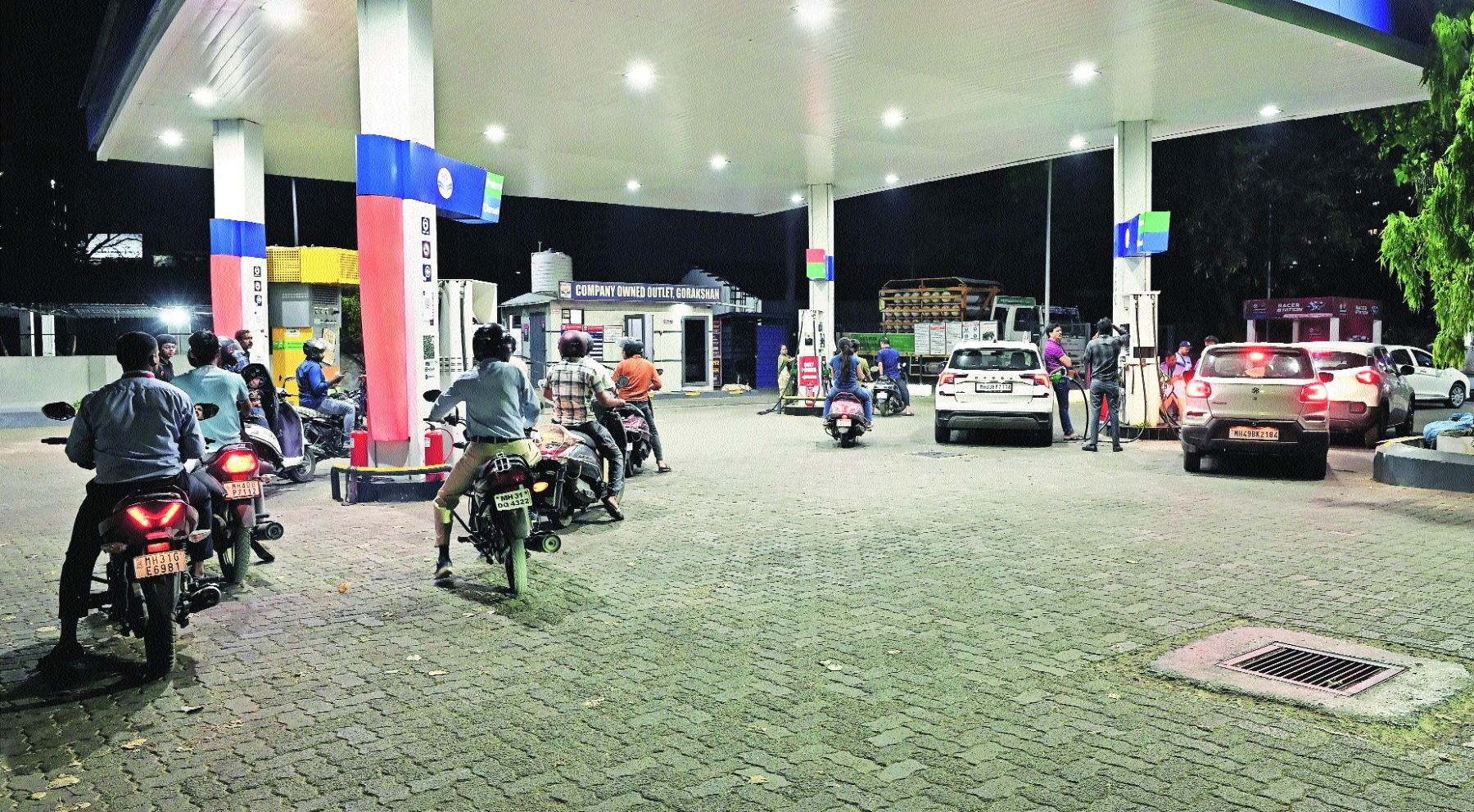
Following rumours of a fuel shortage that triggered panic buying and ‘No Stock’ signs across the city, the situation began to stabilise by Thursday evening. As administrative assurances take effect, the
initial wave of frantic queuing has subsided. (Pic by Anil Futane)
Staff Reporter :
Nearly a week after intense chaos and long queues, the fuel supply situation across the city finally moved towards normalcy on Thursday. The aggressive panic buying witnessed recently triggered by unfounded rumours of a looming fuel shortage gradually subsided, with many petrol pumps reporting significantly thinner crowds compared to the last three days. Customers were seen buying petrol and diesel comfortably at various outlets.
However, about 30 per cent of the total 105 petrol pumps located within the city put up ‘no stock’ boards, on Thursday.
While the ‘self-inflicted’ fuel crisis has eased, a distinct pattern of evening rushes persists.
Observations from areas such as Law College Square, Raj Nagar, Dharampeth and a few other areas showed that petrol pumps in these prime locations were under total
control during the morning hours, with minimal wait times. But as the day progressed, crowds began to swell and the rush returned by late evening as commuters hurried to refuel.
Amit Gupta, President of Federation of All Maharashtra Petrol Dealers Association, told The Hitavada that the situation was under control. “All the dealers are getting supply as per their requirement. But the demand for petrol and diesel has seen a sharp hike recently which had created shortage,” he said.
Administration urges calm
Dr Vipin Itankar, District Collector, along with oil marketing companies have repeatedly assured citizens that the city has adequate fuel reserves to meet daily requirements. Officials have urged the public to stop panic buying, noting that the ‘dry’ status of some pumps was a result of excessive purchasing rather than an actual supply deficit.