PM eSeva buses become fully accessible for disabled people after completion of staff training
| Date :30-Mar-2026 |
Staff Reporter :
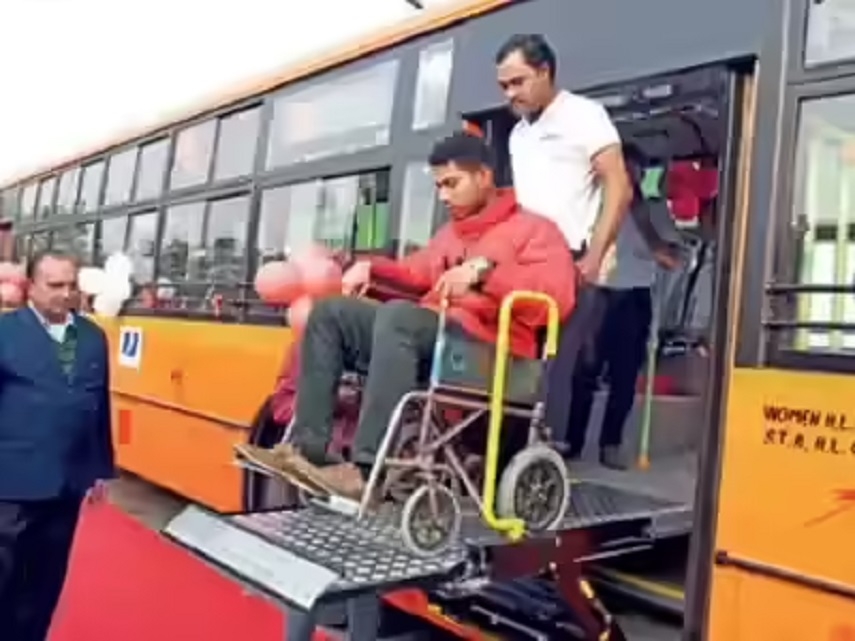
City’s public transport system has taken a significant step towards inclusivity, with the completion of specialised training for over 140 drivers and conductors operating under the PM eSeva bus service. The training, focused on the operation of hydraulic lifts designed for persons with disabilities, has now enabled the fleet to function with enhanced accessibility, officials from Chalo Mobility confirmed.
Chalo Mobility, the private operator entrusted by Nagpur Municipal Corporation (NMC) with managing the PM
eSeva buses along with recruitment and training of personnel, stated that the newly-trained workforce is fully equipped to assist differently-abled passengers.
The hydraulic lift mechanism, a key feature of these buses, ensures safe and dignified boarding for wheelchair users, an aspect that had remained underutilised due to earlier delays in training.
Authorities confirmed that the training programme has now been completed, and the PM eSeva bus service is operational with all intended features.
The buses were formally inaugurated on February 14, 2026 through a virtual event by Prime Minister Narendra Modi.
With the operational readiness of the hydraulic lifts, the PM eSeva buses are expected to significantly improve urban mobility for persons with disabilities in city, marking a shift towards a more inclusive and responsive public transport system.
Dr Parinay Fuke raised question in Legislation
The issue had drawn attention during the Maharashtra Legislature’s Budget Session, when Member of Legislative Council (MLC) Dr Parinay Fuke raised concerns regarding the non-operation of these accessibility features. He highlighted that despite the availability of buses, the absence of trained staff had rendered the hydraulic lifts ineffective, thereby limiting the intended benefits for disabled commuters.
Dr Fuke further pointed out that the delay had implications during the recent Nagpur Municipal Corporation elections, where accessible transport was expected to facilitate voting for persons with disabilities. He argued that the civic body had fallen short in delivering seamless services, though the administration maintained that alternative arrangements, such as wheelchairs and assistance at polling stations, had been put in place. In response, the State Government acknowledged that the delay in training had indeed impacted the rollout of fully functional services. It clarified, however, that the buses which are 30 in number and procured under a Central Government initiative, required specialised training due to the integration of hydraulic systems. The matter had also been noted by the Nagpur bench of the Bombay High Court, which endorsed the need for proper training before deployment.