Delay persists in MSRTC e-bus rollout;Nagpur division still far behind target
| Date :01-Apr-2026 |
By Rohit Pawar :
■Slow deliveries continue to stall State’s largest electric bus project
■ Transport Minister’s wish of making entire MSRTC fleet electric by 2030 seems like a pipe dream
AFTER concerns were first raised last
year over delayed deliveries of electric buses, the rollout by the
Maharashtra State Road Transport
Corporation (MSRTC) continues to
lag, with the Nagpur division emerging as a clear example of the widening gap between targets and execution.
MSRTC had placed a record order
of 5,150 electric buses for deployment
across Maharashtra. However, progress
remains slow.
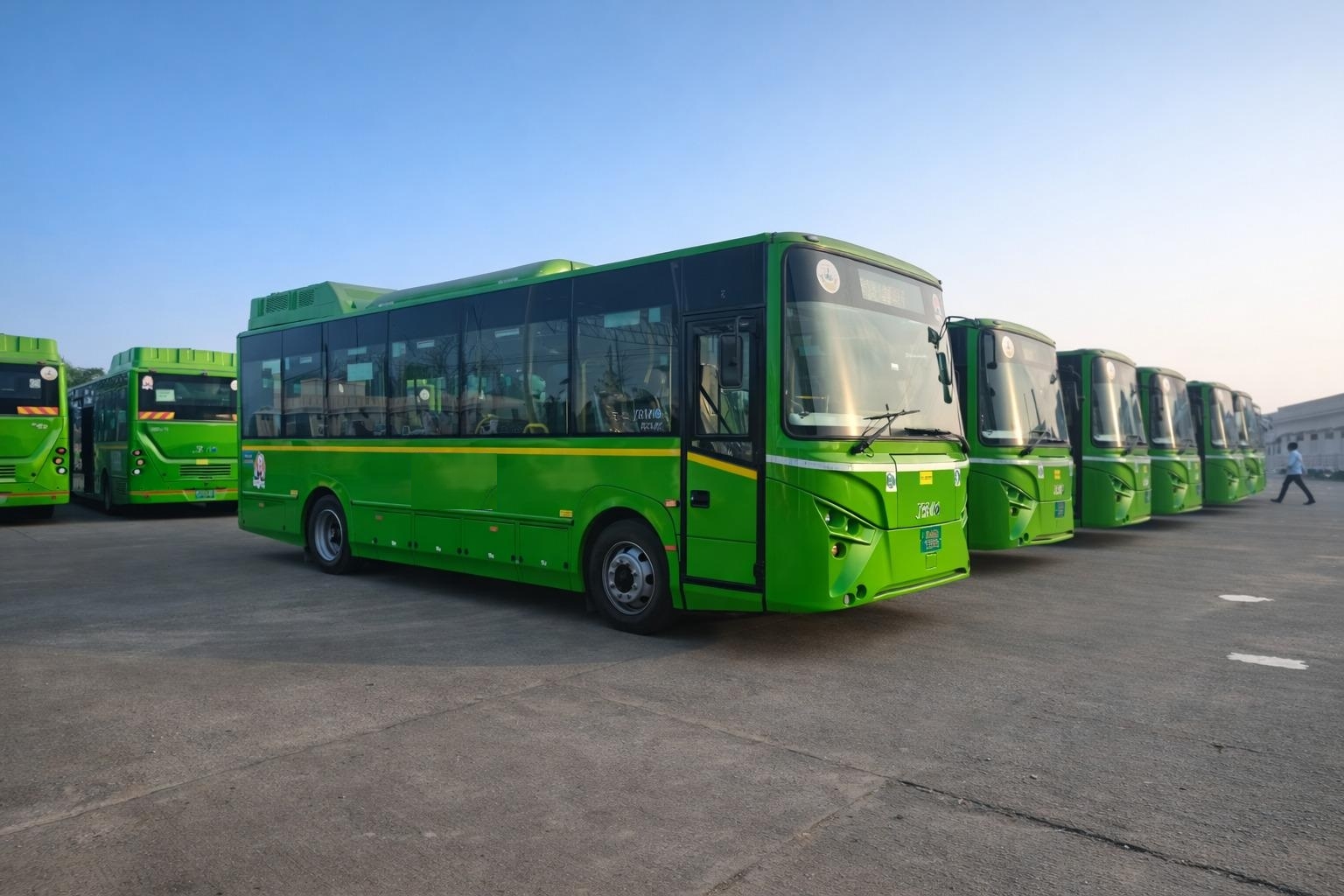
In Nagpur division, only
63 buses have been received so far
against an allocation of 228, limiting
operations to a handful of depots and
routes.
Delays continue to persist linked to
supply constraints at the manufacturer
level. Today the situation shows little
improvement.
Expansion plans hinge on
incomplete depots
FURTHER expansion remains
dependent on new depot infrastructure coming up at Katol, Ramtek,
Saoner and Umred, which are slated
to accommodate 93 buses in total.
When contacted by The Hitavada,
senior officials stated that these facilities are expected to be completed
within 18 months, further pushing
back full operational deployment.
Manufacturer yet to
match scale of orders
THE buses are being supplied by
Olectra Greentech Limited, a subsidiary of Megha Engineering and
Infrastructures Limited-based in
Hyderabad. It has reportedly secured
orders for nearly 17,000 buses across
the country.
However, production
capacity continues to fall short of
expectations.
In Maharashtra alone, only about
1,200 buses have been delivered so far a small fraction of MSRTC’s
total order.
2030 electric target:
Ambition vs Reality
PRATAP Sarnaik, State
TransportMinister,hadrecently set a goal to make the entire
Maharashtra State Road
Transport Corporation fleet
electric by 2030.
However, with only about
1,200 buses delivered in
Maharashtra so far-andjust 63
of 228 in Nagpur division, the
slow paceraises concerns.Even
the current order deadline has
been extended to December
2026. Unless deliveries and
infrastructurework accelerate
sharply, the 2030 target may
prove difficult to achieve