State, Central Government school teachers suffocating under weight of non-teaching duties
| Date :10-Apr-2026 |
Staff Reporter :
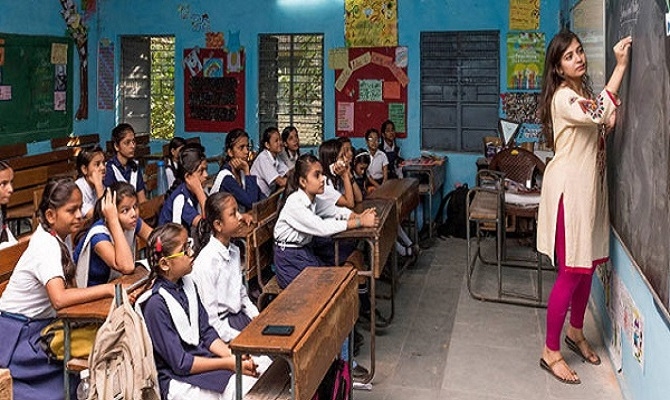
As Maharashtra positions itself as one of India’s fastest-growing economies, a fault line is emerging within its public education system. At the centre of this crisis are State and Central Government school teachers who are increasingly burdened with non-academic duties that pull them away from classrooms and, in turn, weaken the students at their most important stage of development.
SISWA terms census duty as ‘extreme exploitation’
The Self-Financed Independent Schools Welfare Association (SISWA) is against the deployment of Central Board of Secondary Education (CBSE) school teachers for Census 2026–27. In a formal appeal, SISWA President Dipali Dabli urged immediate exemption for teachers working in self-financed CBSE institutions. The association argued that, under provisions of the Census Act, 1948 and the Census Rules, 1990, census duties are meant to be carried out by employees of Government and semi-government bodies. Extending these responsibilities to private, unaided school teachers violates both the spirit and application of these provisions.
Inspections in middle
of examination season
“Teachers are exploited to the highest degree,” said Sapan Nehrotra, Secretary, Shikshak Bharati Organisation, Nagpur Division. “Now Government officers will be coming to carry out ‘inspections’ in school during our examination period to see if all infrastructure is updated, if all student documents are verified, among other things. So now, school teachers have to prepare for exams, evaluations, report cards, on top of inspection formalities and on top of that, Booth Level Officer duty. Of course, inspection is important, but it can be carried out any other time of the year. Why does it have to be in the middle of the busiest time of the school year, especially when teachers are already struggling with non-teaching duties?”
Absence of teachers creates domino effect: “When teachers are absent or overburdened, classroom learning suffers. Students struggle to keep up with the syllabus and perform poorly. Families are forced to invest in private tuitions, which is an additional burden,” said Nehrotra.
“Parents are forced to invest in private tuitions to compensate for gaps in school education. Ironically, despite these systemic challenges, the blame for poor results often falls on teachers,” he added. This constant pressure, combined with long working hours and lack of institutional support, is contributing to rising cases of stress-related health issues such as hypertension and diabetes among teachers.
This raises a fundamental question: can a State truly justify its development narrative while neglecting the backbone of its human capital? Economic growth, infrastructure, and industrial expansion are often highlighted as markers of progress. However, without a strong and supported education system, such growth may prove uneven and unsustainable.
If teachers are not in classrooms, the cost is not just immediate learning loss. It is a long-term compromise on the country’s future workforce, productivity, and social equity.