Wheat Procurement: 1,616 quintals purchased on day one, Payments begin at Rs 2,625 per quintal with record registrations
| Date :10-Apr-2026 |
Staff Reporter :
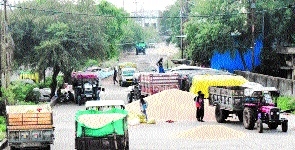
The Government procurement of wheat at support price for the Rabi Marketing Year 2026-27 has commenced in Madhya Pradesh. The procurement process started on April 9 in four major divisions of the State, Indore, Ujjain, Bhopal, and Narmadapuram. Encouraging results emerged on the very first day, with a total of 1616 quintals of wheat purchased from farmers at 45 procurement centers.
Food, Civil Supplies, and Consumer Protection Minister Govind Rajput stated that robust arrangements have been made under the guidance of Chief Minister Dr. Mohan Yadav, while procurement in the remaining divisions will begin from April 15.
Price of Rs 2,625 per quintal including bonus: To provide economic support to farmers this year, the state government has arranged a special bonus over and above the support price. On the Minimum Support Price (MSP) of Rs 2585 per quintal fixed by the Central Government, the Madhya Pradesh government is providing an additional bonus of Rs 40 per quintal.
Thus, farmers are being paid at a total rate of Rs 2625 per quintal. So far, 97,474 farmers in the state have booked online slots for the sale of 4,46,582 metric tonnes of wheat.
New record in registration and procurement target: Food Minister Govind Rajput informed that a record 19.04 lakh farmers have registered to sell wheat in the state this year, which is 3.60 lakh more than the previous year. Despite adverse conditions, the Government has set an
ambitious target of procuring 78 lakh metric tonnes of wheat this year, which is one lakh metric tonne more than last year’s procurement of 77 lakh metric tonnes. Robust arrangements for storage and gunny bags: The department made high-level arrangements to keep the procured grain safe. Adequate stocks of jute bags, as well as PP/HDPE bags and filling bags, have been made available at the procurement centers. The government’s primary focus is on the immediate transportation and safe storage of the grain along with the purchase, so that the farmers’ produce is not damaged by weather changes or other adverse circumstances.