Sweet surprise from nature
| Date :12-Apr-2026 |
By Ujjwal Tiwari :
PENDRA :
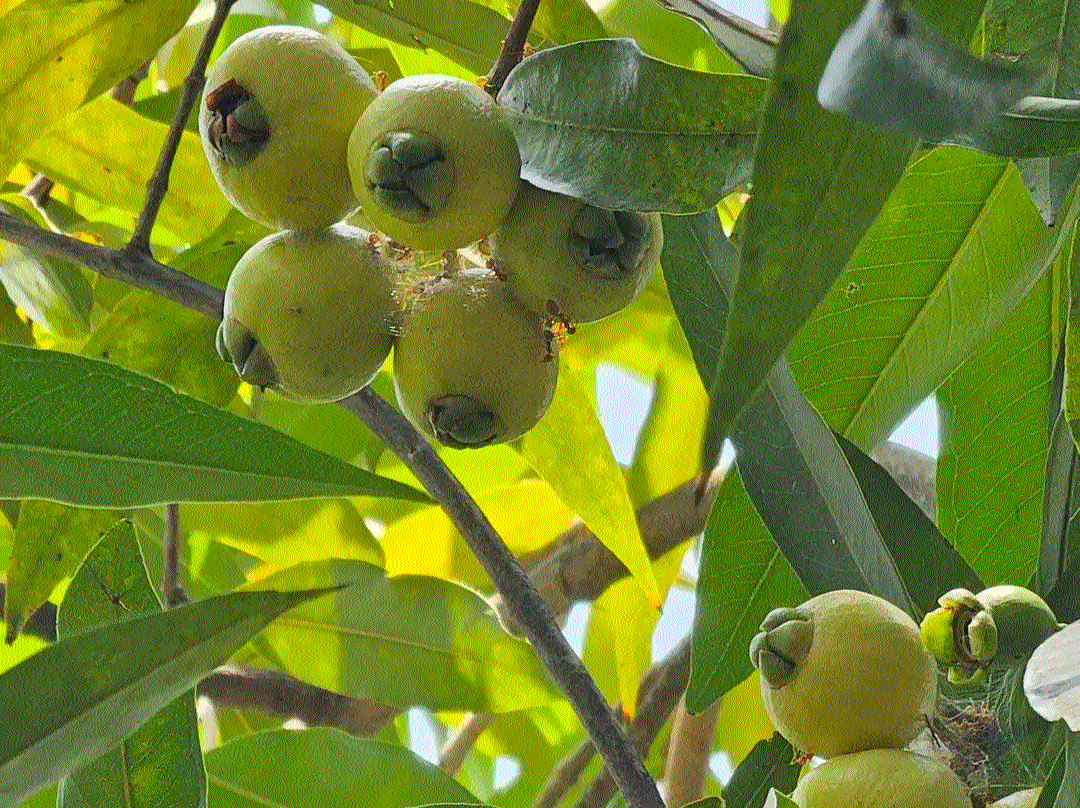
THE very mention of gulab jamun usually brings to mind the soft, syrup-soaked sweetness associated with traditional Indian desserts. However, residents of the Pendra region are currently talking about a seasonal fruit that is popularly known locally as the “Gulab Jamun fruit” for its distinctive flavour resembling the
famous sweet.
At first glance, the fruit appears modest and unremarkable. Light yellowish-green in colour and similar in shape to a guava, it gives little indication of its uniqueness. The fruit begins developing on trees in February and reaches full ripeness between March and May. As it matures, it emits a mild rose-like fragrance. Locals say that its taste closely resembles that of gulab jamun, offering a naturally sweet and distinctive flavour that has inspired its popular name.
The fruit is typically consumed by gently pressing and eating its outer fleshy layer, while a single large round seed remains inside. Interestingly, when shaken near the ear, the seed produces a soft rattling sound due to a slightly hollow inner structure, an unusual feature that often surprises first-time consumers. The seed is generally discarded after consumption.
Beyond its taste, the fruit is also associated with certain traditional medicinal uses. According to local knowledge, the seeds, when dried and grounded into powder, are believed to help regulate blood sugar levels.
Powdered leaves are also used in traditional remedies. However, experts advise caution and recommend consulting qualified professionals before using such preparations, as scientific evidence supporting these claims remains limited. With the arrival of the harvesting season, demand for the fruit has increased noticeably in markets across Pendra and nearby areas.
The fruit is currently being sold at prices ranging between Rs100 and Rs 150 per kilogram.
Local resident Awadhesh Gupta said the fruit typically appears during the months of Phalgun and Chaitra Navratri, adding seasonal and cultural significance to its availability.
Though widely associated with the Pendra region, the fruit is also reported to be found in several northern and central Indian states, including Uttar
Pradesh, Bihar, Jharkhand, Madhya Pradesh, Haryana, Punjab, Delhi, Uttarakhand and Himachal Pradesh. It has also been observed in limited quantities in parts of South India and the North-East. Once considered a little-known