Ancient Bhonsle-era vessel unearthed at Ramtek temple site
| Date :13-Apr-2026 |
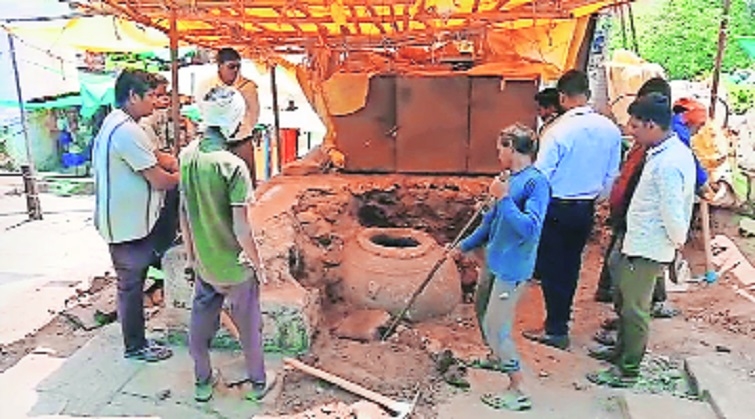
Officials from the Directorate of Archaeology and Museums
supervising the excavation site at Ramtek temple.
Ramtek Correspondent :
Speculation surrounding the discovery of a mysterious pot during excavation at the Ram Mandir (Garh Mandir) premises in Ramtek came to an end on April 11 after officials from the Directorate of Archaeology and Museums, Maharashtra, confirmed it to be a historical stone water vessel dating back to the Bhonsle period.
The object was found on April 10 by labourers engaged in excavation work near the ‘Varaha Mandir’ area, where steps leading to the temple are currently under construction.
The workers halted the digging immediately after spotting the pot, suspecting it might contain treasure or valuable artefacts.
The matter was promptly reported to Piyush Mahajan, the temple’s receiver and Sub-Divisional Officer (Revenue). Acting swiftly, Mahajan visited the site and directed that the status quo be maintained until experts from the Directorate of Archaeology and Museums could conduct a proper examination.
A three-member team from the directorate arrived at the Ramtek fort temple site on April 11. After carefully extracting and studying the object, the team concluded that the pot is a stone ‘Jalpaatra’ (water container) used during medieval times to store drinking water for travellers and soldiers passing through the fort.
Maruti Raju Bortukne, investigating officer, stated that similar vessels have been found at other forts and are characteristic of the Bhonsle era.
He clarified that no artefacts or valuables were found inside the pot. Bortukne added that, the vessel holds historical significance and will be preserved after further study to determine its exact age.
The discovery, though not treasure-laden as initially speculated, has provided a valuable glimpse into the region’s historical infrastructure and practices.