Committee formed to prepare draft for implementation of UCC
| Date :16-Apr-2026 |
Staff Reporter :
The Chhattisgarh Cabinet on Wednesday took several key policy decisions, including the formation of a high-level committee under retired judge Ranjana Prakash Desai to prepare the draft for implementation of the Uniform Civil Code (UCC) in State.
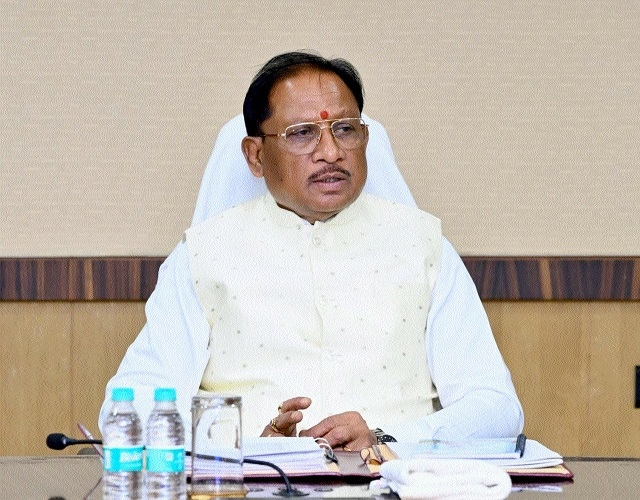
The meeting, chaired by Chief Minister Vishnu Deo Sai at Mantralaya in Nava Raipur Atal Nagar, also approved measures aimed at women’s empowerment, welfare of ex-servicemen, mining sector reforms, industrial facilitation, livestock health, and inter-state financial settlement.
Addressing media persons after the meeting, Deputy Chief Minister Arun Sao said the Cabinet authorised the Chief Minister to nominate members of the committee headed by Justice (Retd) Ranjana Prakash Desai. The committee will prepare a draft framework for implementing the UCC in Chhattisgarh after extensive consultations with citizens, organisations, and legal experts.
At present, disputes related to marriage, divorce, inheritance, adoption, maintenance, and other family matters are governed by different personal laws across religious communities. Article 44 of the Constitution encourages the State to endeavour towards securing a Uniform Civil Code for all citizens.
The proposed committee will collect public feedback through consultations and a dedicated web portal before finalising its recommendations. The draft prepared by the committee will be placed before the Council of Ministers and subsequently introduced in the Chhattisgarh Legislative Assembly for consideration.
In another significant decision aimed at promoting women’s economic empowerment, the Cabinet approved a 50 per cent reduction in land registration fees for property purchased in the name of women. The Government estimates that this measure will result in a revenue loss of approximately Rs 153 crore but
considers it a major step towards encouraging women’s property ownership and strengthening their financial independence.
The Cabinet also approved a proposal to provide relief to serving soldiers, ex-servicemen and their widows by granting a 25 per cent rebate in stamp duty, once in a lifetime, on the purchase of property valued up to Rs 25 lakh within the state. The decision is expected to benefit defence personnel who often face frequent transfers during service and seek to establish permanent residences after retirement. To promote industrial development and improve land allotment processes, the Cabinet approved amendments to the Chhattisgarh Industrial Land and Building Management Rules, 2015. The revised provisions will ensure statutory eligibility for allotment of land to the service sector, rationalize minimum and maximum limits for land allotment, and provide statutory access to approach roads for land bank plots. Inclusion of financial institutions, including NBFCs, is expected to improve access to industrial finance and support Ease of Doing Business initiatives in the state. The Cabinet also approved amendments to the Chhattisgarh Minor Minerals Ordinary Sand (Excavation and Business) Rules, 2025. Under the revised provisions, sand mines may be reserved for Central or State Government public sector undertakings such as the Chhattisgarh Mineral Development Corporation Limited. The move is aimed at addressing sand supply shortages caused by monopolistic practices and ensuring availability of sand in remote regions.
Further amendments were approved to the Chhattisgarh Minor Mineral Rules, 2015, with the objective of improving transparency, enhancing regulatory control, and increasing revenue generation in the mining sector. Stricter provisions have been introduced for mines that remain closed or idle without valid reasons, and mandatory rent rates for such mines have been revised after three decades. Stronger mechanisms have also been incorporated to declare such inactive leases as lapsed to ensure operational continuity.
The Cabinet also approved stricter penalties for illegal mining, transportation and storage of minerals, with fines ranging from a minimum of Rs 25,000 to a maximum of Rs 5 lakh. A security deposit provision has also been introduced in cases involving illegal transportation. Additional reforms include provisions for merger of mining leases, post-contract land entry permissions, and mandatory compliance with environmental conditions to promote systematic utilisation of mineral resources and strengthen the state economy. In the livestock sector, the Cabinet approved amendments to the pilot project scheme for supply of dairy cattle so that beneficiaries from all social categories, including Scheduled Tribes, can avail its benefits. The decision is expected to enhance self-employment opportunities, increase income levels and contribute to rural economic development.
To ensure timely vaccination of livestock against infectious diseases, the Cabinet granted approval for procurement of vaccines from Indian Immunologicals Limited, Hyderabad, a subsidiary of the National Dairy Development Board. The decision was taken in view of limited competition in the tender process and non-availability of rates on the GeM portal, which had been affecting vaccine supply schedules. Vaccines required during the financial year 2026–27 will be procured by January 2027, ensuring disease prevention, reduced mortality among livestock, and increased production of milk, eggs and meat. In a major financial decision, the Cabinet approved a proposal related to settlement of pension liabilities between Chhattisgarh and Madhya Pradesh under the provisions of the Madhya Pradesh State Reorganization Act 2000.
As part of reconciliation of earlier accounting discrepancies by banks, it was agreed that excess pension payments amounting to Rs 10,536 crore made by the Chhattisgarh Government in previous years would be returned by Madhya Pradesh. Of this amount, Rs 2,000 crore has already been paid during the financial year 2025–26, while the remaining Rs 8,536 crore will be disbursed in six annual installments. The Cabinet also reviewed arrangements for fertilizer availability for the upcoming Kharif season and assessed the status of LPG supply across the state to ensure adequate availability for farmers and households.