No direct negotiations, as US’ trust level is at zero: Iran
| Date :02-Apr-2026 |
DUBAI :
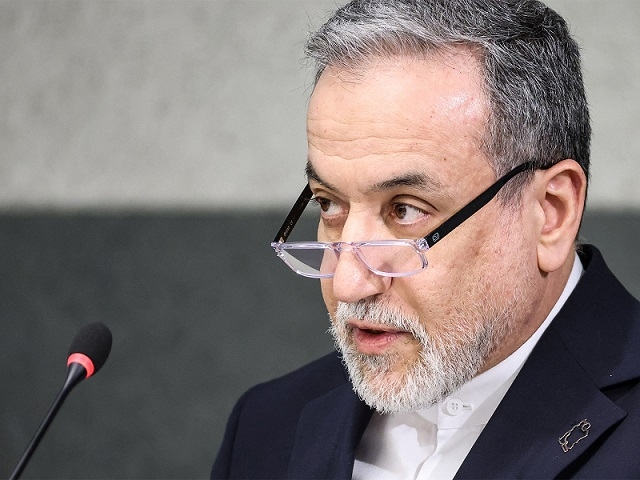
EVEN as Iran acknowledged for the first time that Washington had been in direct contact about a possible ceasefire, Iranian Foreign Minister Abbas Araghchi signalled Tehran’s willingness to keep fighting. He insisted that there were no direct negotiations and said, Iran has no faith that talks with the US could yield any results, saying “the trust level is at zero.”
Speaking to ‘Al Jazeera’, Iranian Foreign Minister Abbas Araghchi signalled Tehran’s willingness to keep fighting.
“You cannot speak to the people of Iran in the language of threats and deadlines,” he said. “We do not set any deadline for defending ourselves.”
Meanwhile, Iranian missiles hit an oil tanker off the coast of Qatar and Kuwait’s airport on Wednesday. Airstrikes also
battered Tehran, hours after US President Donald Trump said he was nearly ready to wind down the war in two to three weeks.
Trumps statement raised the possibility that the US could withdraw without any guarantee from
Iran that it would stop bombing its Gulf Arab neighbours or release its grip on the crucial Strait of Hormuz.
A fifth of the world’s traded oil passes through the strait in peacetime and Tehran’s stranglehold, along with its strikes on energy infrastructure in the region, has caused oil prices to skyrocket, with far-reaching consequences for the global economy.
Even if the strait were to reopen quickly, some effects like higher food prices could persist for months or longer.
It’s also not clear what Israel, which began bombing Iran alongside the US on February 28, would do if the US pulls out without a deal. It also leaves open the question of what Iran might do with the highly enriched uranium still in its stockpiles.
Trump’s comments offered another mixed signal from the American leader who has offered shifting objectives for the war and repeatedly said it could be over soon while also threatening to widen the conflict. Thousands of additional US troops are currently heading to the Middle East, and speculation abounds about the purpose of their deployment.
Just days ago, Trump warned that the US would attack Iran’s power plants if Tehran did not reopen the strait by April 6. He has also threatened to attack Iran’s Kharg Island oil export hub and possibly desalination plants.
But on Tuesday, Trump said the US “will not have anything to do with” ensuring the security of ships passing through Hormuz.
Trump has been under growing pressure to end the war as oil prices have skyrocketed, pushing up the cost of gasoline, food and other goods. The spot price of Brent crude, the international standard, was up more than 40 per cent since the start of the war, trading at more than USD 103 a barrel on Wednesday.
The US has presented Iran with a 15-point plan aimed at bringing about a ceasefire, including a demand for the strait to be reopened and for is nuclear programme to be rolled back. Iran insists its nuclear programme is peaceful. Its own five-point response includes retaining sovereignty over the strait.
In the interview with ‘Al Jazeera’, Araghchi acknowledged receiving direct messages from US Mideast envoy Steve Witkoff. He insisted, however, that there were no direct negotiations and said Iran has no faith that talks with the US could yield any results, saying “the trust level is at zero.”
He warned against any US attempt to launch a ground offensive, saying “we are waiting for them.”
A cruise missile slammed into an oil tanker off Qatar’s coast on Wednesday, the Defence Ministry said. The 21-member crew of the tanker, contracted by state-owned QatarEnergy, was evacuated and no casualties were reported. A fully-loaded Kuwaiti oil tanker came under attack off Dubai the day before, one of more than 20 ships attacked by Iran during the war.
In the United Arab Emirates, a person was killed when he was hit by debris from an intercepted drone in Fujairah, one of the country’s seven emirates.
Bahrain sounded two alerts for incoming missiles, while Kuwait’s state-run KUNA news agency said a drone hit a fuel tank at Kuwait International Airport, sparking a large fire.
Two drones were also intercepted in Saudi Arabia, and air raid sirens sounded in Israel though there were no immediate reports of damage or casualties.
An airstrike on Tehran, meanwhile, appeared to have hit the former US Embassy compound, which has been controlled by Iran’s Revolutionary Guard since American diplomats were held hostage there in 1979.
Witnesses said buildings outside the massive compound had their windows blown out and that it appears the strike happened inside the walled facility.
Israel also said it hit a plant in Iran producing fentanyl, a synthetic opioid. Israel and the United States have alleged in recent years that Iran was experimenting with using fentanyl in chemical weapons.
Iran acknowledged a strike on Tuesday on Tofigh Daru factory, but insisted it only supplied “hospital drugs.” Hospitals use fentanyl to treat severe pain but it can also be fatal.
In Lebanon, at least five people were killed in an Israeli strike on a Beirut neighbourhood. Israel invaded southern Lebanon after the Iran-linked Hezbollah militant group began launching missiles into northern Israel days after the outbreak of the war.
Many Lebanese fear another prolonged military occupation.
More than 1,200 people have been killed in Lebanon and more than 1 million displaced, according to authorities. Ten Israeli soldiers have also died there. In Iran, authorities say more than 1,900 people have been killed, while 19 have been reported dead in Israel. More than two dozen people have died in Gulf states and the occupied West Bank, while 13 US service members have been killed.
Will open Hormuz but not for you: Iran MP to Trump
THE head of the National Security Commission of the Iranian Parliament, Ebrahim Azizi, on Wednesday said that the Strait of Hormuz will be closed for those who will not follow the new rules. “The Strait of Hormuz will certainly reopen, but not for you; it will be open for those who comply with new laws of Iran,” Azizi said on X, referring to US President Donald Trump. “Finally, Trump has reached the dream of regime change, but in the regime changed in the region’s seas! The 47-year era of hospitality is over,” he said.
Campaign against Iran not over: Netanyahu: ISRAELI Prime Minister Benjamin Netanyahu said that Israel’s campaign against Iran’s regime “not over”, claiming that joint operations with US have “shaken” the regime.
“A month into our joint campaign with the US, we are crushing the regime of terror that screamed ‘Death to America, Death to Israel’,” Netanyahu said. Adding that the “campaign is not over”, he said, “We have shaken the regime; sooner or later it will fall.”
He said that Israel is building new regional alliances.
“I hope that soon I will be able to share more about the new alliances with important countries in the region.”
Criticising the Iranian regime, he said, “The ayatollahs’ regime has spent nearly a trillion dollars over the years on the immense effort to wipe us out. That trillion went down the drain.”
Meanwhile, BritishPrime Minister Keir Starmer on Wednesday said the UK will host an international diplomatic conference this week on ways to reopen the Strait of Hormuz. Starmer says, 35 countries have signed a statement committing to work together on restoring maritime security to the key oil transport route.