Smart City project turns dim in Gol Bazaar, Costly heritage lights lie defunct
Date :20-Apr-2026
By Dhanendra Chaurasia :
What was once projected as a model of urban renewal under the Smart City Mission is now raising serious questions over planning and accountability. In Gol Bazaar, a key Area Based Development (ABD) zone, expensive heritage lighting infrastructure has remained non-functional for months, leaving locals to deal with the fallout.
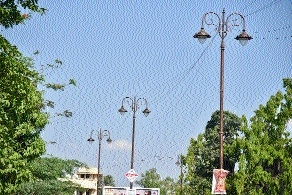
In 2023, Jabalpur Smart City Limited (JSCL) installed 171 large and 74 small heritage poles in the important area at an estimated cost of around Rs 2 crore. The project included complete electrification and was showcased as a major step towards beautification and improved civic amenities. However, the reality on the ground tells a different story today.
A Bhopal based agency was entrusted with operation and maintenance (O&M) of the system, but the contract reportedly ended in 2025. Since then, the poles have gradually gone out of order and are now largely non functional.
Many of them require basic components such as plates,
starters and other electrical fittings, but no repairs have been carried out so far.
Officials cite fund constraints as a major reason.
With JSCL facing a financial crunch and transferring several projects to the Jabalpur Municipal Corporation
(JMC), responsibility appears to be in limbo. While technical support has been assured, neither JSCL nor JMC has taken concrete steps to restore the lighting system.
Local Corporator Ayodhya Tiwari when contacted said he has repeatedly raised the issue with the Municipal Commissioner, Executive Engineer and even the Collector, who is also Director of JSCL. “Assurances have been given, but no action has been taken so far,” he said.
The neglect has not only rendered a costly project useless but also affected the area’s safety and ambience. Traders and residents say poor lighting, encroachments and lack of maintenance have worsened conditions in the area.
The situation highlights a larger concern over sustainability of Smart City projects. Without timely maintenance and clear accountability, public investments risk turning into liabilities, leaving citizens to pay the price for administrative lapses.