From online chat to suicide: The ‘Telegram’ horror story
| Date :22-Apr-2026 |

By Dheeraj Fartode :
What began as casual chats on social media slowly turned into something far more sinister. The tone changed, messages grew darker and what followed was a steady stream of disturbing suicide videos, instructions for suicide and subtle threats from someone hiding behind fake names like “Ghost” on social media. Day by day, a young girl was drawn into a psychological trap - one where fear and pressure quietly took over her reality. It all ended with a chilling final act: a video she recorded herself, moments before taking her last breath by committing suicide. This is not just another suicide case - it’s a disturbing example of how online manipulation can destroy a life from within.
The incident came to light in the Hudkeshwar Police Station area, where an 18-year-old girl died by suicide inside her bathroom. She reportedly used the lanyard of her college ID card to hang herself from a tap. Initial reports treated it as an accidental death, but the investigation soon revealed a deeper and more troubling story.
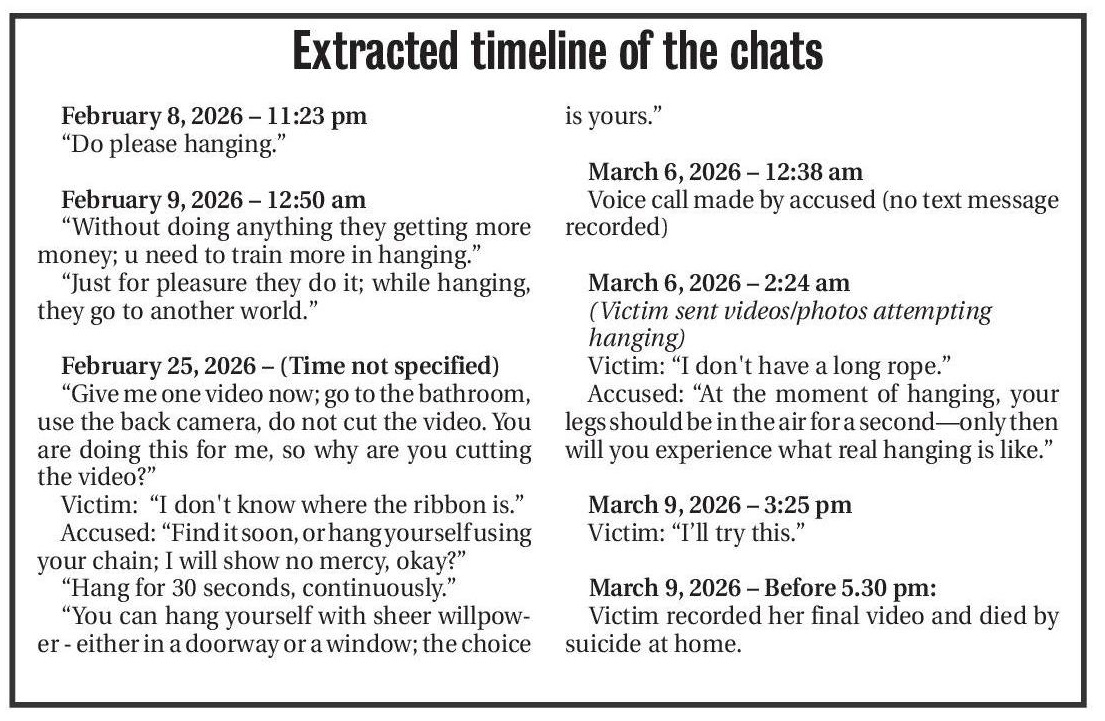
According to the complaint filed by her family, the victim, Punam (name changed), had been in contact with an unknown individual on ‘Telegram’ mobile application. The person allegedly operated under fake identities, including a profile named “Ghost,” and regularly sent her disturbing videos and messages that encouraged suicide.
Family members said they had earlier noticed unusual chats and videos on her phone. Alarmed, they confronted her and even deleted the ‘Telegram’ app, hoping to cut off contact. But it appears the communication continued in some form, eventually leading to the tragic outcome.
On March 9, around 6 pm, Punam was found hanging in the bathroom. Her family rushed her to a nearby hospital, but doctors declared her dead.
As the police began investigating, the contents of her mobile phone painted a disturbing picture. Chat histories revealed repeated exchanges between the victim and the accused, including videos and images showing people hanging or choking. Investigators believe these were used to influence and condition her.
Police later seized the phone, and during forensic examination, they found a video recorded on the day of her death.
The clip, about 2 minutes and 38 seconds long, reportedly shows Punam filming herself during the act. Officials noted that she
appeared unusually calm - even smiling - which raised question about the level of psychological control involved.
Further analysis of the chats showed that the accused had been pressuring her for weeks. He allegedly instructed her to go to the bathroom, set up the camera, and attempt hanging without stopping the recording. In some messages, he used threatening language, demanding videos and warning that he would “show no mercy” if she didn’t comply.
One of the most disturbing findings relates to messages sent late at night. Around 11:23 pm on February 8, the accused allegedly shared a video demonstrating a strangulation act while instructing her to try it. Shortly after, at 12:50 am on February 9, he sent multiple images showing girls in similar situations, along with messages that appeared to normalise and encourage such behaviour. Investigators believe this pattern was deliberate, aimed at slowly breaking down her resistance and pushing her towards self-harm.
In another exchange, when Punam told him she didn’t have a rope, he suggested alternatives like using a chain or ribbon
and even explained how to carry out the act. According to police, this shows clear and continuous instigation.
Chats also revealed that Punam had shared videos of herself attempting such acts using a ribbon tied to a bathroom window. Instead of stopping her, the accused allegedly encouraged her further by sending more similar content.
On the day of the incident, just hours before her death, Punam sent a final message saying, “I’ll try this,” after watching another video. Soon after, she recorded her last video.
The family’s complaint also mentions that this wasn’t the first time such content was found on her phone.
As early as October 2025, similar videos related to suicide methods had been discovered, suggesting prolonged exposure to harmful material.
Based on the evidence, the family has accused the person behind the ‘Telegram’ accounts and linked mobile number of repeatedly sending obscene and disturbing content, and of directly encouraging their daughter to take her own life.
Experts say this case highlights how vulnerable young users can be to online manipulation, especially when harmful content is pushed repeatedly and without supervision.