‘US-Iran ceasefire likely to be extended’
| Date :22-Apr-2026 |
WASHINGTON :
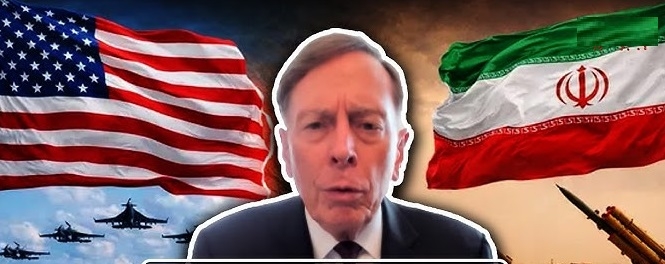
THE ceasefire between the US and Iran is expected to be extended beyond the initial two-week period, as both sides are willing to continue negotiations, former Central Command chief David H Petraeus has said. The ceasefire between the US and Iran is set to expire on Wednesday.
Petraeus, the former general who also served as CIA director, said that there is a “reasonable expectation” that the ceasefire could be prolonged as negotiators from both sides prepare for a possible second round of talks in Islamabad, although uncertainty remains over final participation.
“I think both the US and Iran want to extend the ceasefire,” he told PTI Videos.Petraeus warned that the situation on the ground remains volatile, with both the US and Iran enforcing rival blockades in the strategically critical Strait of Hormuz, effectively halting maritime traffic.
“There may be use of force, as required for the US to implement the blockade that has been required in response to Iran’s blockade. There have been occasional attacks also that appear to have come from Iran, individual attacks that have seemed to threaten or force ships to turn around that were trying to go through the Strait,” he said.
Outlining two key American “negotiating objectives”, Petraeus said, “One is to restore freedom of navigation to the
Gulf and to the Strait of Hormuz without any control by Iran or tariffs or tolls paid to Iran.”
“And the second is that Iran renounces its right to enrich uranium and allows the International Atomic Energy Agency or some other body to verify the removal of the stockpile of nearly 1,000 pounds of 60 pc enriched uranium,” he added.
Iran, however, has so far resisted calls to halt its uranium enrichment.
On the military front, Petraeus described the US-led campaign, carried out alongside Israeli forces, as “impressive” in degrading Iran’s air defences, missile systems and military infrastructure.
However, he said the overall outcome of the conflict remains “incomplete”.
Despite tactical successes, Petraeus warned that failure to reopen the Strait of Hormuz to free navigation could leave Iran “strategically somewhat strengthened” even if militarily weakened.
On future scenarios, he said options remain open, including resumption of intensive air operations or deployment of ground forces, though “large-scale offensives to topple the regime or something like that” are unlikely.
Petraeus, who served as the commander of CENTCOM from 2008-2010, also indicated that the US had prior knowledge of Israel’s intent to strike Iran, driven by concerns over Tehran’s evolving missile capabilities.
“The US was aware Israel would attack Iran amid missile threat concerns,” he said.
Will start bombing Iran if no
deal by Wednesday: Trump
WASHINGTON,
Apr 21 (PTI)
US President Donald Trump on Tuesday said he would start bombing Iran if they do not agree to a deal with the US before the end of the two-week ceasefire on Wednesday.
“Well, I don’t want to do that,” Trump told CNBC’s “Squawk Box” when asked if he would extend the ceasefire with Iran to allow time for the peace talks to reach a deal to end the war.
“They have to negotiate. And, you know, the one thing I’ll say is this: Iran can get themselves on a very good footing. If they make a deal, they can make themselves into a strong nation again, a wonderful nation again,” he added.
Trump said that if the cease-fire ends on Wednesday without an agreement, he is prepared to resume attacking Iran.
“I expect to be bombing because I think that’s a better attitude to go in with,” he said.
The President said he thinks the US is “going to end up with a great deal” with Iran to end the weeks-long war.
“I think they have no choice,” Trump said when asked about his expectations from the second round of peace negotiations with Iran. “We’ve taken out their navy, we’ve taken out their air force, we’ve taken out their leaders,” the President said. “We’ve taken out their leaders, frankly, which does complicate things in one way, but these leaders are much more rational,” Trump said.
“It is regime change, no matter what you want to call it, which is not something I said I was going to do, but I’ve done it indirectly.”
While the first round of US-Iran talks, held on 11 and 12 April, ended without an agreement, uncertainty surrounds the second round.
US, Iran signal they will return to Pakistan for ceasefire talks: TWO regional officials said on Tuesday that the United States and Iran have signaled they will hold a new round of the ceasefire talks in Islamabad.
The officials’ comments come as neither the US nor Iran have publicly confirmed the timing of the talks, with Iranian state television denying any official was already in Pakistan’s capital.
Pak-led mediators received confirmation that top negotiators, US Vice President JD Vance and Iran’s Parliament Speaker Mohammad Bagher Qalibaf, will arrive in Islamabad early on Wednesday to lead their teams in the talks, officials told ‘The Associated Press’.
The officials spoke on condition of anonymity because they were not authorised to brief reporters.
Iranian state television on Tuesday issued an on-screen alert saying that “no delegation from Iran has visited Islamabad ... So far” as speculation about possible talks with the United States grows.
The on-screen alert likely reflects the internal debate ongoing within Iran’s theocracy as it weighs how to respond to the US Navy’s seizure of an Iranian container ship over the weekend.
Iranian state TV long has been controlled by hard-liners within Iran’s theocracy.
So far, no official has acknowledged that a delegation will be heading to Islamabad, where officials have been on standby for days now for the possible talks.
US Vice President JD Vance is expected to lead an American team to the talks. Iran has offered no word on who could lead its delegation. Last time, parliamentary speaker Mohammad Bagher Qalibaf led the Iranian side.