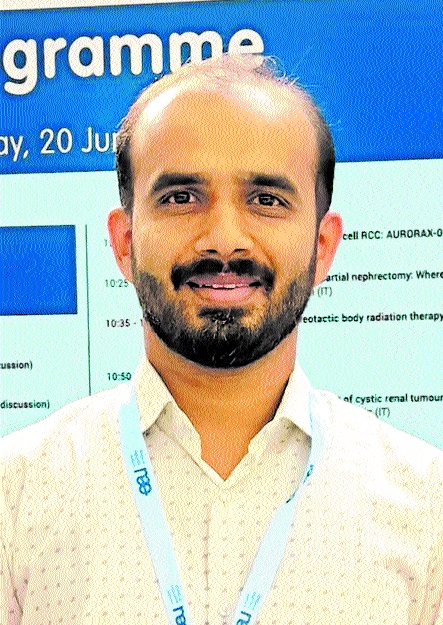
Soon, AIIMS Bhopal to perform paediatric renal transplant Exclusive interview with Dr Ketan Mehra by Bhavana ‘Aparajita’ Shukla
| Date :25-Apr-2026 |
By Bhavana ‘Aparajita’
Shukla :
Congratulations to the efficient team of nephrologists, urologists, and the other team members of the kidney transplant unit who successfully performed the ABO-incompatible kidney transplant. AIIMS Bhopal has achieved another major milestone in the medical field by successfully using this technique for the first time. As quoted by the Executive Director and CEO of the institute, Professor (Dr) Madhabananda Kar, this success is a testament to excellent teamwork and advanced clinical capabilities. Our next goal is to perform kidney transplants in children.
‘The Hitavada’ raised the point that paediatric renal transplant is the preferred treatment for end-stage kidney disease (ESKD) in children, offering better survival, growth, and development compared to dialysis. It involves placing a healthy donor kidney (often from a living parent donor) into the child, allowing for improved quality of life and near-normal function.
As various reports suggest,
success rates are high, with one year patient survival around 97%.
However, we would like to know the challenges faced by such transplants, admitting the fact that children have particular anatomical issues as well as long-term medicine management systems compared to adolescents. Dr Mehra states that children also have growth impairment issues. Elaborating more on this, he said that since the donor is an adult and the patient has small space to fit an adult’s kidney, it poses complex surgical considerations, especially in small children.
That is why there are just a handful of centres in the country which perform this kind of transplant.
Since
AIIMS Bhopal has performed its first ABO-incompatible kidney transplant, we can say that in a couple of months the institute will be able to perform kidney transplants in children. We have a few cases in line that require this procedure.
What is an ABO-incompatible kidney transplant and why it holds significance in today’s time: It is a boon for patients who cannot find a blood-group-compatible donor within their family.
This complex and resource-intensive technique not only increases donor availability but also reduces the long waiting time for transplantation. In India, such transplants account for only about 5 to 10 per cent of all living donor kidney transplants.
With current medical protocols and modern techniques, the success rate of these transplants is now on par with compatible transplants, allowing patients to lead a healthy life in the long term, provided they adhere to regular medication and follow-ups. This marks the 20th successful kidney transplant at AIIMS Bhopal.
In this procedure, a 47-year-old father (AB positive) donated his kidney to his 22-year-old son (A positive).
Usually, there is a risk of organ rejection by the body due to different blood groups, which the experts at AIIMS successfully controlled using modern protocols.
This challenging surgery was performed by a multidisciplinary team of experts from the Departments of Nephrology, Urology, Anaesthesiology, Transfusion Medicine, and CTVS. The successful team included Dr Mahendra Atlani, Dr Devashish Kaushal, Dr Ketan Mehra, Dr Kumar Madhavan, Dr Vaishali Waindeskar, Dr Saurabh Sehgal, Dr Sunaina Tejpal Karna, Dr Ashutosh, Dr Harish Kumar, Dr Shikha Jain, Dr Sandeep, Dr Romesh Jain, Dr Vikram Watti and Transplant Co-ordinator Dilip Shakya.