ESR raises red flag; experts ask ‘Where are the statistics?’
| Date :26-Apr-2026 |
By Reema Mewar :
Environment and green experts of Nagpur city raised concern over the credibility of the latest Environmental Status Report (ESR) released this month by Nagpur Municipal Corporation (NMC), prepared by the CSIR-National Environmental Engineering Research Institute (CSIR-NEERI).
Instead of presenting updated, data-driven insights into the city’s environmental health, the report references mostly outdated or recycled data.
Several chapters lack quantifiable metrics altogether, which does not give a holistic understanding of the city’s current environmental realities.
Ambient air quality
Particulate matter 10 (PM10), a major contributer to air pollution, is primarily generated by road dust, construction activity, and vehicular emissions during idling. This has been marked as a point of concern in previous ESRs. However, instead of using updated data, they have recycled last year’s data,
“The city has witnessed extensive road construction, and large-scale development work over the past two years; and the absence of updated air quality data prevents us from seeing the actual environmental scenario,” said Kaustav Chatterjee, Founder, Green Vigil Foundation to
The Hitavada.
“All air quality data of Nagpur city are available in Central Pollution Control Board (CPCB) and Maharashtra Pollution Control Board (MPCB) websites, however the data is mostly centralised in Civil Lines areas which is more greener than other
parts of the city. If you really
want accurate metrics, then these stations should be installed in zones which are more polluted. The thermal power plant in Koradi contributes to so
much air and dust pollution.
We should have a monitoring station in Godhni to assess it,” Chatterjee explained.
Chatterjee also suggested using portable high volume samplers, which are instruments designed to measure ambient air quality by drawing large, known volumes of air through a filter, capturing particles for later analysis. He said this would be more accurate when it comes to analysing air quality.
“Aside from this, wind rose (graphical tools used to show the frequency, speed, and direction of wind at specific locations) reference stations should also be installed in the opposite direction of wind outside Nagpur to see how much pollution is being carried in and out.”
Climate change: The climate change chapter barely has any Nagpur-specific data at all. Previous ESRs tracked deviations in annual maximum and minimum temperatures, seasonal variations, and long-term trends through charts and graphical analysis. The current report offers little to no city-specific data. Instead, it only shows broad, generic recommendations such as urban greening and nature-based solutions. There is no analysis of extreme heat days, no breakdown of seasonal temperature variations, and no attempt to explain emerging patterns. This is particularly concerning for Nagpur.
The report also fails to examine the impact of urban changes such as cement road construction, which may contribute to heat retention and exacerbate urban heat conditions. Without data, these connections remain unexplored.
Green spaces and biodiversity: Earlier ESRs had provided detailed, zone-wise assessments of green cover using the internationally recognised 3-30-300 framework, which evaluates visibility of trees, canopy cover, and proximity to green spaces. This allowed for clear identification of which zones required intervention in what areas. The latest report has abandoned this detail. Instead, it classifies the city’s ten zones into three broad categories -- high, medium, and low performing. It does not disclose the metrics or criteria used for this classification. Only two zones are marked as high performing, three as low, and the rest fall in middle category.
This has removed the report’s purpose to track progress or decline. For instance, zones like Laxmi Nagar, which previously performed relatively well, are now placed in the low-performing category without any explanation. “The ESR is an annual report, and should have detailed and updated data each year to help evaluate where progress is lacking. If CSIR-NEERI is not giving us precise details that would enable authorities to take action, what is the point in producing the report at all?” questioned Sharad Paliwal, a green activist.
Water environment and noise pollution: The segement for water environment also lacks metrics and data.
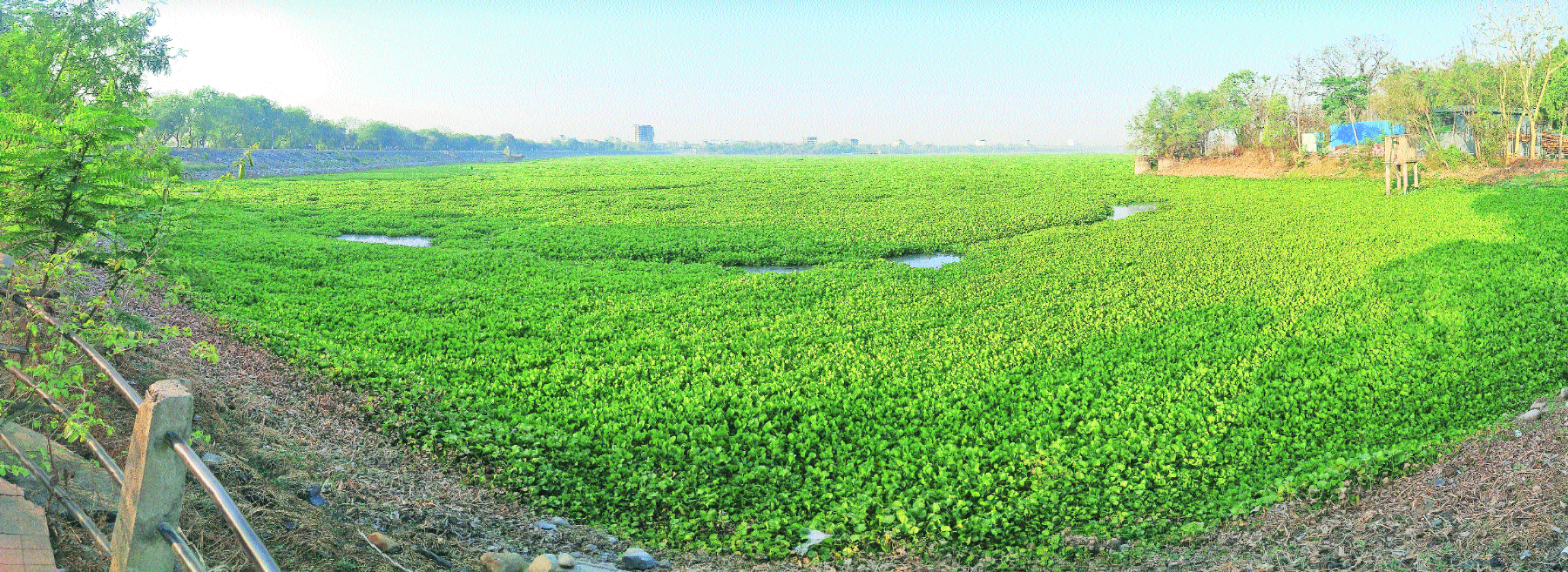
The ESR has sampled water from 10 lakes in the city, but no data about the present quality of water was shared. Lendi Talao, which has vanished from the city map has also been completely ignored in the latest ESR. To mitigate climate change, blue infrastructure like ponds, lakes, and rivers have been recommended by CSIR-NEERI as essential measures, but rampant concretisation work choked the tributaries of these water bodies. Noise pollution has also seen a dilution in the data. The ESR provides only a broad statement that most zones are non-compliant with CPCB norms. It does not include any numerical data or zone-wise breakdowns.