‘Rising pollution in Ambazari lake impacts Hingna industries’
| Date :27-Apr-2026 |
Business Reporter :
Growing concerns over deteriorating water quality of Ambazari lake have triggered urgent discussions among stakeholders, with industries warning of increasing operational disruptions. MIDC Industries Association (MIA) on Saturday raised serious concerns over the issue saying that polluted water of Ambazari lake is impacting many industries in Hingna area.
P Mohan, President of the association, said that the root of the problem lies in the declining condition of Ambazari lake, the primary raw water source for the Hingna water treatment plant (WTP). “Continuous inflow of untreated domestic sewage from nearby areas has led to a sharp rise in organic pollution. Key indicators such as low dissolved oxygen (DO) and high biochemical oxygen demand (BOD), chemical oxygen demand (COD), and total organic carbon (TOC) point to significant deterioration.
The situation is further aggravated by foul odour, visible colour, and the rapid spread of water hyacinth, which accelerates eutrophication and oxygen depletion, making conventional treatment increasingly ineffective,” he highlighted.
He noted that inconsistent water quality has resulted in scaling in pipelines, corrosion of machinery, inefficiencies in cooling systems, and increased maintenance costs. For sectors such as pharmaceuticals, food processing, and precision manufacturing, where water quality directly affects product standards, the implications are even more severe, potentially leading to production losses and reputational risks. He stressed that water must be treated not merely as a utility, but as a critical raw material essential for industrial sustainability.
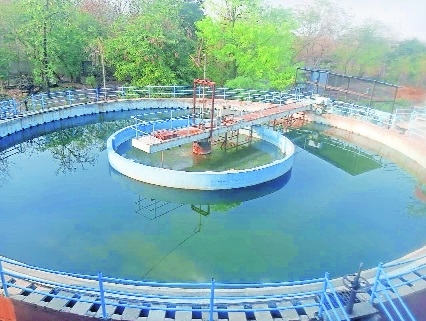
The existing treatment system—comprising aeration, coagulation using Poly Aluminum Chloride (PAC), sedimentation, filtration, and chlorination—was designed for moderately contaminated water but is now struggling to handle the current high organic load. Inefficient coagulation has resulted in poor floc formation, allowing suspended particles to pass through and clog filtration systems, leading to frequent backwashing and reduced efficiency.
Excessive chlorination, adopted to maintain disinfection, has also raised concerns due to the increased risk of forming harmful disinfection by-products such as trihalomethanes (THMs), especially in the presence of high organic content. Additionally, the formation of biofilms within plant infrastructure has reduced disinfection effectiveness and increased chemical consumption.
The Water Treatment Plant (WTP) at Hingna MIDC, operated by the Maharashtra Industrial Development Corporation (MIDC), continues to serve as a crucial backbone for one of Vidarbha’s industrial hubs. With a design capacity of 13.5 million litres per day (MLD), the plant supports a wide range of industries that depend on a consistent and reliable water supply for production, cooling, cleaning, and potable use.
The situation at Hingna MIDC highlights a broader challenge of environmental degradation impacting critical infrastructure. While technological interventions have shown positive results, long-term sustainability will depend on a coordinated effort between authorities and industries to protect water sources and modernize treatment systems.
Ensuring high-quality water supply is not only essential for industrial productivity but also for the broader economic development of the region.