300-year-old Bhonsle-era well near Nagpur airport falls into neglect, heritage at risk
| Date :29-Apr-2026 |
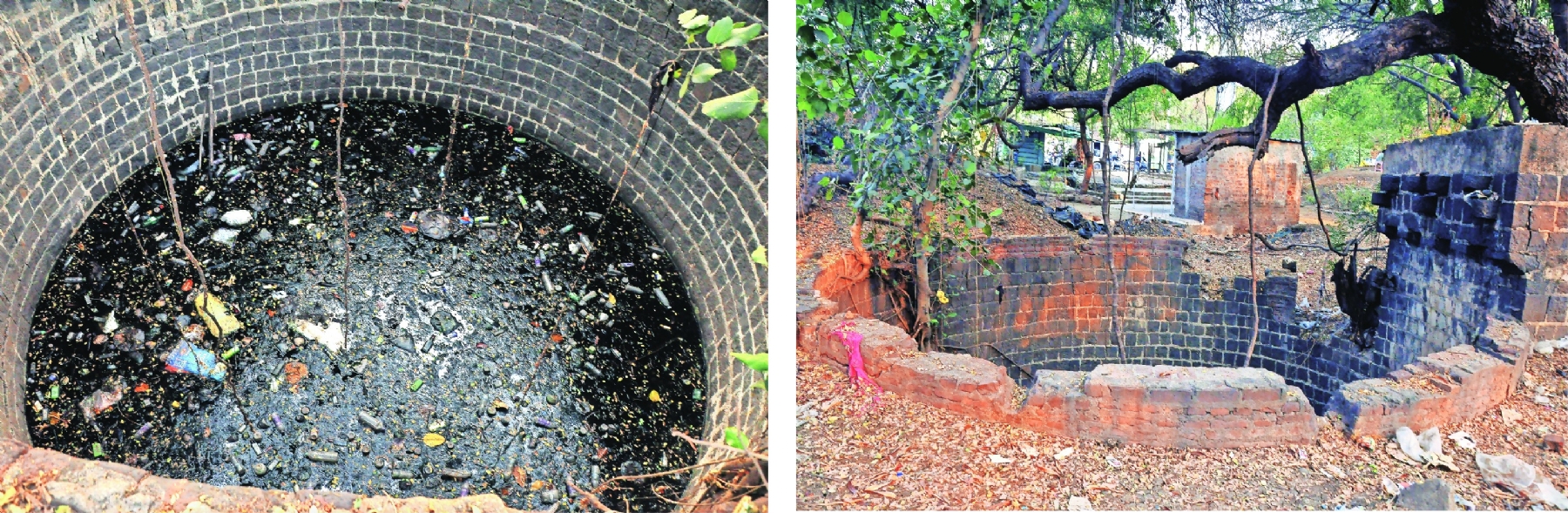
The 300-year-old well in ruins due to severe negligence of citizens as well as authorities. (Pics by Anil Futane)
Staff Reporter :
A 300-year-old well from the Bhonsle era, once a lifeline for the Sonegaon belt, is rapidly losing its historical identity as neglect and unchecked dumping push the structure towards ruin. Located near the Panchmukhi Hanuman temple in Aamrai on the way to Dr Babasaheb Ambedkar International Airport from Sonegaon, the site today stands choked with plastic waste, algae and debris, its stone architecture barely visible beneath layers of filth.
Believed to have been part of a carefully designed traditional water management system, the well reflects the ingenuity of an era when groundwater structures were built to sustain settlements through seasonal variations. Its stone steps, descending into the shaft, and the robust masonry bear testimony to that legacy.
Now, sections of the structure have crumbled, and the absence of any safety measures has made the site hazardous.
The setting, however, still hints at its former significance. Surrounded by an old Hanuman temple, green cover and forested patches, the well sits within a landscape that combines ecological and historical value. Despite its relative isolation from dense habitation, the area draws a steady stream of visitors. Informal gatherings, ranging from picnics to small celebrations, have become common, but the lack of basic oversight has resulted in waste being indiscriminately dumped into the well and its vicinity.
Local citizens and morning walkers have voiced concern over the steady deterioration. They point out that, what was once a functioning water source, has now turned into a dumping ground, reflecting a broader disregard for heritage structures that do not fall under formal protection.
The absence of signage, fencing or conservation measures has only accelerated the damage.
Residents argue that the well, if restored, could serve multiple purposes of supporting groundwater recharge, sustaining nearby greenery, and acting as a supplementary water source in times of scarcity. More importantly, it could preserve a tangible link to Nagpur’s historical water systems.
Calls have been made to the district administration and public representatives to intervene urgently. Citizens stress the need for documentation, scientific assessment and conservation of such structures across the district, warning that inaction will erase not only a functional asset, but also a significant chapter of the city’s heritage.