City’s noise pollution alarming, failure to comply with guidelines exceeds 80%
| Date :29-Apr-2026 |
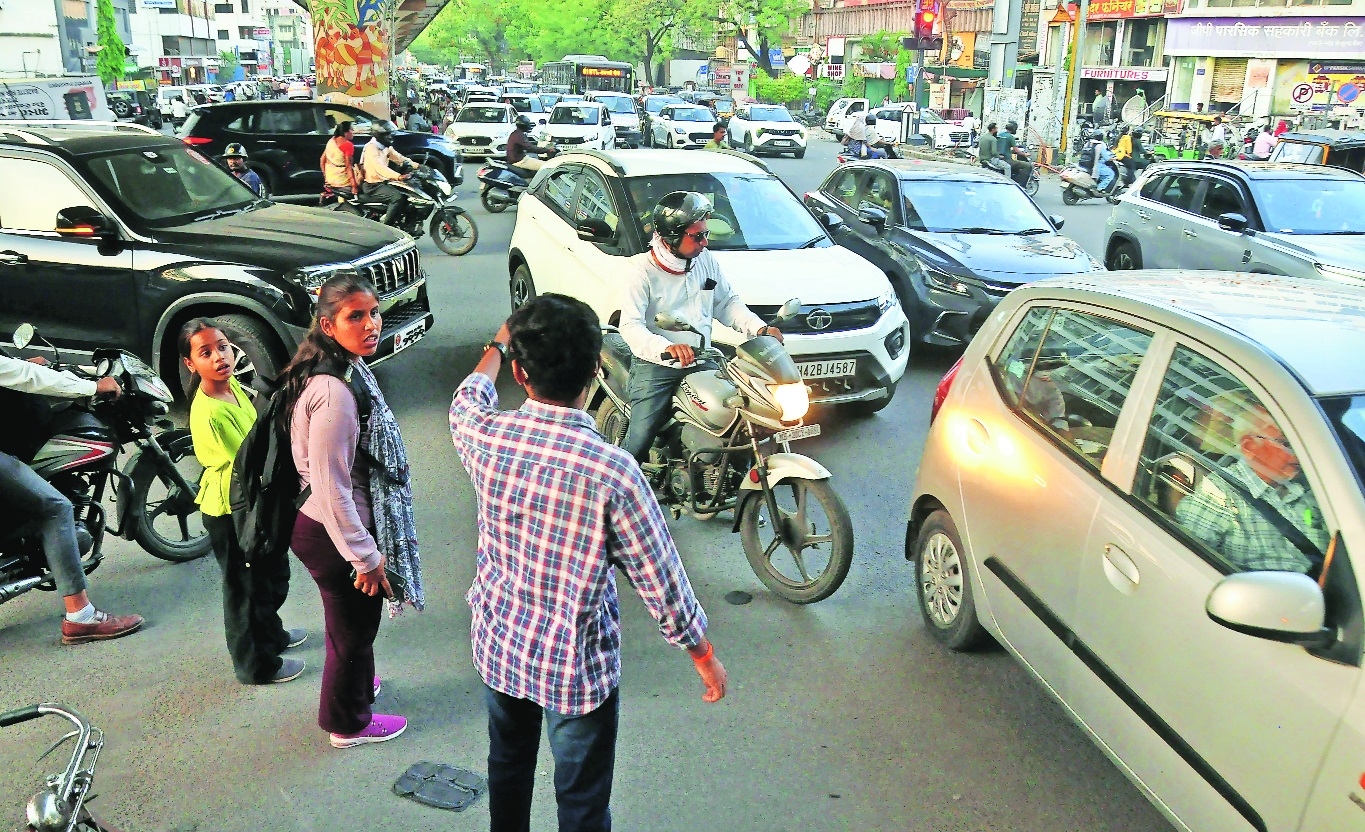
Janata Chowk, one of major hotspots of traffic congestion in city.
By Reema Mewar :
- The ESR points to widespread violations, weak enforcement, and rising health risks due to noise pollution.
- The overall non-compliance levels in the city exceed 80 per cent, and the condition was the same last year as well.
The latest Environment Status Report (ESR) revealed that, Nagpur city has failed to comply with the noise standards, as noise pollution levels exceed 80 per cent, which, as per the report, may lead to chronic health conditions like stress, hypertension, disturbed sleep, and even cardiovascular diseases. The ESR, prepared by CSIR-National Environmental Engineering Research Institute (NEERI), mentions widespread non-compliance with Central Pollution Control Board (CPCB) noise standards in all its 10 zones. While the current report does not provide detailed zone-wise metrics, the conclusions are similar to the previous ESR.
Traffic growth adding to noise pollution
An increase in private vehicle ownership in recent years has also added to the rising noise pollution levels in the city. As Nagpur expands, traffic congestion has become more common across major roads and squares, leading to frequent honking and constant, elevated noise.
The report indicates that all four designated categories -- silence zones, residential zones, commercial zones, and industrial zones, are witnessing significant non-compliance with prescribed noise standards. ESR 2023-24 has pointed out that in Dharampeth, Lakadganj, and Gandhibagh zones, the demarcated silence zones, which should not exceed 50 dB during day time and 40 dB at night, failed to comply with the standards notified by CPCB.
What was once concentrated in specific hotspots is now part of daily noise, making traffic-related chaos a constant feature of the city’s sound environment. Nagpur has also seen widespread infrastructural development in the last few years, which has added to the noise pollution.
Limited visible action
Both the current and previous ESRs have exactly the same recommendations, including the need for a comprehensive noise management strategy, improved monitoring, stricter enforcement of regulations, and greater public awareness. Additional measures such as sound barriers, zoning controls, and restrictions on noise generating activities in sensitive areas have also been proposed. However, the repetition of these recommendations across both reports means that implementation on the ground has been limited or inconsistent.
While regulatory frameworks and technical recommendations are clearly outlined, the central concern is the absence of sustainable implementation and enforcement. The ESR report shows a gap between policy on paper and actual implementation. This raises questions about how effectively the NMC is addressing an increasingly pervasive environmental and public health challenge.