Metro plans flood-resilient, viaduct-led expansion across Kanhan river
| Date :30-Apr-2026 |
By Simran Shrivastava :
- The northern stretch is being designed with elevated structures, deep foundations and climate safety margins to handle monsoon and long-term environmental risks
- Cost is pegged at Rs 300 crore with engineers saying crossing Kanhan river is going to be quite challenging due to wide width
The extension of Nagpur Metro Rail Corporation Limited (NMRCL) service till Kanhan town presents a challenging situation for the engineers who have envisaged a 1.4-km-long bridge with height of 15 metres above the ground level. At present, metro corridor has been completed till Automotive Square and in second phase, it is proposed to link the neighbouring Kamptee town. Since Kanhan is also nearby, the State decided to reach upto Kanhan.
As per information, Detailed Project Report (DPR) about extension of metro route till Kanhan has been submitted to the State Government in February last year. Now same is under review before being sent to the Ministry of Housing and Urban Affairs (MOHUA) for final approval, it is learnt.
The project, estimated at around Rs 300 crore, will add one station in Kanhan and extend metro services beyond the existing city limits. The proposed stretch is aimed at serving daily commuters travelling from Kamptee and Kanhan to Nagpur for work and business, while reducing congestion on the busy Kamptee Road corridor and linking surrounding towns to the metro network.
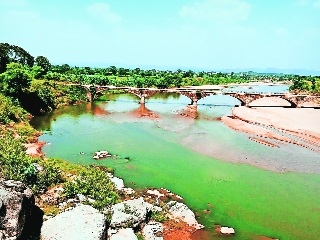
The short stretch has drawn attention due to the planned crossing over the Kanhan River, making it one of the most technically complex sections of the Phase II expansion. A senior MahaMetro official shared that a portion of the alignment will run over the river through an elevated structure, including a steel viaduct spanning several hundred metres.
Engineers have proposed specialised foundations suited for river conditions, where large watertight structures will be placed in the river and gradually sunk into the riverbed to reach stronger soil layers before being filled with concrete to support metro pillars. This method is typically used in bridge construction where the riverbed is unstable and water flow is continuous.
The metro structure will be built above the highest flood level of the river to ensure uninterrupted operations during heavy monsoon periods. Officials added that, additional safety margins are being factored in to address extreme rainfall and long-term climate risks.
The official added that, construction will use the precast segmental method, where concrete segments will be manufactured separately and assembled on site. This approach will reduce construction activity inside the river and help maintain natural water flow. Planning for the river crossing is based on studies of soil conditions, water flow and flood levels to determine foundation depth, pillar spacing and long-term structural stability. The infrastructure is being designed for a life span of about 100 years, considering load, vibration, weather and seismic factors.
Environmental aspects are also being considered, as the Kanhan river has faced pollution and sand mining issues in recent years. The design aims to limit structures inside the river and avoid disrupting natural flow, although environmental clearances and land acquisition near Kanhan are still pending.
The proposal is awaiting State-level approval and will then be sent to the Centre for final clearance. After approvals, the process will move to appointing a detailed design consultant and finalising a contractor. Construction of the extension is expected to take 18 to 24 months, with work over the river likely to be scheduled post monsoon.
The Kanhan stretch forms part of the broader Phase II expansion of Nagpur Metro, which plans to add nearly 44 km of corridors connecting areas such as Hingna, Butibori and Transport Nagar, with a long-term vision of expanding the network to around 55 km and beyond. Though limited in length, the extension is seen as a key step in taking metro services beyond the city core, with the river crossing expected to play a crucial role in future expansions into surrounding regions.