C’garh strengthens renewable energy base, yet lags behind, Over the past 5 yrs, the State has nearly doubled its capacity, reflecting consistent expansion, especially in solar and biomass segments
| Date :06-Apr-2026 |
Staff Reporter
:
CHHATTISGARH has shown
steady growth in the renewable
energy sector, with its total
installed non-conventional power capacity reaching 3,246.93 MW
in the current financial year.
Over the past five years, the
State has nearly doubled its
capacity, reflecting consistent
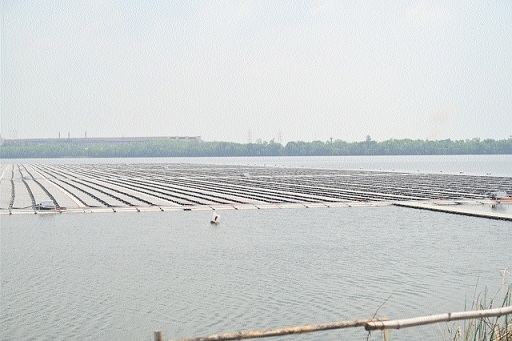
expansion, especially in solar
and biomass segments.
Biomass remains another key
strength for Chhattisgarh, contributing 1,327.09 MW, making
it one of the better-performing
states in this segment. This strong
base has played a crucial role in
supporting the state’s renewable
energy growth.
Looking at the year-wise trend,
the state started with a total
capacity of 1,633.89 MW in FY
2020–21. At that time, biomass
dominated with 1,089.32 MW,
while solar stood at 370.80 MW
and small hydro at 145.52 MW.
Bagasse contributed 28.25 MW,
while wind and other sources
had no presence.
In FY 2021–22, total capacity
increased to 1,938.21 MW. Solar
rose to 436.56 MW and biomass
to 1,307.27 MW, showing strong
growth.
Small hydro also improved to
185.67 MW, but bagasse declined
sharply to 8.70 MW. The growth
continued in FY 2022–23, with
total capacity reaching 2,003.05
MW. Solar saw a major jump to
635.42 MW, while biomass
slightly declined to 1,194.60 MW.
Small hydro stood at 155.92
MW and bagasse improved to
17.10 MW.
In FY 2023–24, the state recorded a significant rise, with total
capacity increasing to 2,477.44
MW. Solar expanded rapidly to
943.75 MW and biomass rose
again to 1,368.61 MW. Small
hydro remained almost stable at
145.54 MW, while bagasse
reached 19.54 MW.
A major leap was seen in FY
2024–25, when total capacity
surged to 3,225.93 MW. Solar
crossed the 1,500 MW mark at
1,523.27 MW, while biomass also
peaked at 1,543.26 MW.
Small
hydro slightly declined to 139.34
MW and bagasse remained low
at 20.05 MW.
In FY 2025–26, total capacity
increased marginally to 3,246.93
MW. Solar further rose to 1,671.91
MW, becoming the largest contributor. Biomass declined to
1,327.09 MW, while small hydro
improved significantly to 240.35
MW. Bagasse dropped sharply to
7.58 MW, and wind and wasteto-energy remained at zero.
At the national level, India’s
total renewable energy capacity
stands at 2,83,621.23 MW, which
places Chhattisgarh’s contribution at a relatively small level. In
solar energy, the state’s 1,671.91
MW is far behind Rajasthan’s
54,226.99 MW, Gujarat’s
23,245.13 MW and Karnataka’s
more than 16,000 MW.
Even Madhya Pradesh, within the same region, has a higher solar capacity of 7,274.96 MW. In biomass, Chhattisgarh
holds a comparatively strong position, as many states have
limited capacity in this segment. However, in small hydro,
the state’s 240.35 MW is lower than Himachal Pradesh’s
2,605.70 MW and Karnataka’s 2,734.32 MW. Odisha (589.35
MW) and Uttarakhand (323.95 MW) also report higher figures.
The state continues to record zero capacity in wind energy, while leading states such as Gujarat (31,404.95 MW),
Tamil Nadu (23,699.39 MW) and Karnataka (17,811.83 MW)
dominate this segment. Similarly, there is no contribution
in waste-to-energy, unlike Delhi (446.17 MW) and West Bengal
(1,334.66 MW). Bagasse-based power generation in
Chhattisgarh remains low at 7.58 MW, compared to Uttar
Pradesh (2,048.91 MW) and Maharashtra (3,044.52 MW).
Overall, while Chhattisgarh has built a stable base in solar
and biomass, its total capacity remains lower than states
like Madhya Pradesh (12,328.10 MW) and Maharashtra
(21,698.56 MW), highlighting the gap with larger renewable energy producers. Experts believe that while
Chhattisgarh’s growth in solar and biomass is encouraging, the absence of wind and waste-to-energy sectors limits its overall potential.