Crisis looms over Alegaon’s sweet-n-sour Kagdi lemon
| Date :08-Apr-2026 |
By Sachin Murtadkar :
Farmers distressed due to climate change, diseases, shortage
ALEGAON,
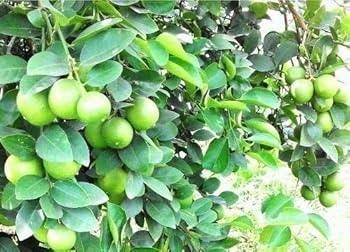
The sweet-sour tasting Kagdi lemon, which has brought statewide recognition to the Alegaon-Wadegaon region in Akola district, is currently facing a severe crisis. Continuous changes in climate, increase in unseasonal rainfall, and the spread of fungal diseases have led to a sharp decline in production, pushing farmers into financial distress. Once flourishing across thousands of hectares, these orchards are now struggling against the whims of nature, raising serious concerns over the very identity of the region.
In the Alegaon-Wadegaon area, Kagdi lemon is cultivated on hundreds of hectares. These lemons are widely popular not only across the State but also in interstate markets due to their unique sweet-sour taste. However, in recent years, irregular climatic changes have severely impacted the crop. This year, the mrig bahar initially appeared satisfactory at the beginning of the monsoon, but a sudden rise in temperature led to large-scale flower drop.
Later, fog during October-November prevented the remaining blossoms from sustaining.
The situation remained similar during the ambiya bahar season. Additionally, recent unseasonal rains accompanied by strong winds caused a significant drop of small fruits from the trees. As a result, production has declined drastically, leading to heavy losses for farmers. Due to these adverse conditions, many farmers are now considering moving away from lemon cultivation.
Meanwhile, the incidence of fungal diseases in lemon orchards has increased. Diseases like dieback and others are causing branches to dry up, and in some cases, entire trees are withering. This has severely affected fruit setting. Farmers are demanding that the Agriculture Department provide on-field guidance to control the increasing spread of these diseases.
With the onset of summer, the demand for lemons typically rises. However, due to reduced production, a shortage has emerged in the market.
Currently, lemons are priced between Rs 70 to 80 per kilogram, and prices are expected to rise further as temperatures increase.
Consequently, lemons are gradually disappearing from the common man’s plate.
In this context, questions are also being raised regarding the implementation of agricultural laws and schemes. Farmers have complained that compensation under crop insurance schemes is not being provided on time. Under the National Horticulture Mission, the process for availing subsidies is complex, creating hurdles in receiving actual benefits. Moreover, the agricultural extension system has not been effectively reaching farmers, resulting in a lack of timely guidance.
Speaking on the situation, farmer Shankar Lahamge said, “Kagdi lemon farming is our main source of income. But this year, flowers did not survive, fruits dropped, and diseases increased. Costs are rising while income is decreasing. If the Government does not provide immediate assistance, we will have to abandon this farming.”
Hotel businessman Gopal Korkane said, “Lemon is an essential part of our business. But due to the current shortage and rising prices, our business is suffering. We either have to charge customers more or reduce the use of lemon in dishes. If this situation continues, it will seriously impact our business.”
Overall, Kagdi lemon is not just a crop but a symbol of identity and tradition for the Alegaon-Wadegaon region. However, the current crisis has put this legacy at risk, and if timely measures are not taken, there is a fear that this sweet-sour taste may remain only as a memory in the future.
Earlier, lemons were easily available, so we used them freely in all our dishes. But now the situation has completely changed. Due to rising prices and limited supply, managing daily purchases itself has become a challenge. At times, we have to serve lemon separately to customers or look for alternatives. This has created a major challenge in maintaining the quality of our food as well as sustaining the business,” asserted Ashwin Patil, Aashirwad Dhaba.