NMC to scale down heatwave mitigation sites despite identified high-risk zones
| Date :08-Apr-2026 |
Staff Reporter :
Nagpur Municipal Corporation (NMC) is set to reduce the number of locations where heatwave mitigation measures will be implemented this summer, despite a recent assessment identifying multiple high-risk zones across the city.
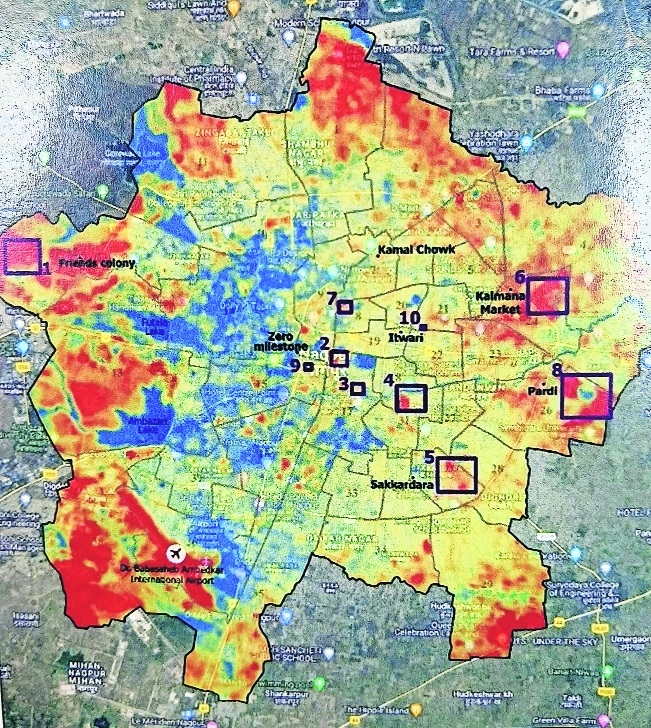
A Multi-Hazard Risk Vulnerability Assessment (MVRVA) conducted in 2025 by the Maharashtra Government’s Relief and Rehabilitation Department in collaboration with the United Nations Development Programme (UNDP) had flagged 10 heatwave-prone areas based on land surface temperature (LST) data.
These included Sitabuldi market, Cotton Market, Ganeshpeth Bus Stand, Kalamna Market, Itwari, Boriapura and Bhandewadi dumping yard, among others.
However, civic officials have indicated that arrangements such as drinking water kiosks, green shade nets and public cooling spaces will not be implemented across all identified zones this year. The number of intervention sites will be curtailed, with a final decision to be taken once temperatures rise further.
Low population,
limited usage cited
Officials from the Health Department said field visits revealed that not all high-temperature zones require intervention. “Certain locations with elevated LST were either sparsely populated or not actively used during peak daytime heat, reducing the necessity for mitigation measures,” an official said.
Areas such as Dhairyasheel Colony and Reshimbag ground were cited as examples where high temperatures do not translate into significant human exposure due to limited daytime activity.
Delay in heat
action plan rollout
The scaling down comes as the city’s annual heatwave action plan is yet to be formally implemented. The plan, typically rolled out in April, has been delayed this year due to administrative transitions, including the appointment of a new Municipal Commissioner and the swearing-in of newly-elected corporators.
Civic officials said two key meetings—one chaired by the Municipal Commissioner and another by the Mayor—are required before implementation. Approval to convene these meetings is still awaited.
Proposed mitigation measures
The broader plan includes installing green nets at traffic junctions, opening public parks during afternoon hours, setting up rest shelters in Government buildings and providing drinking water facilities. Measures to shift homeless individuals to shelters during peak heat are also part of the strategy.
With heatwave-like conditions already recorded in March and peak summer approaching, concerns persist over delayed execution and the reduced number of intervention sites in a city increasingly vulnerable to extreme heat.