Children roped in as beggars at city squares
| Date :01-May-2026 |
By Dr Sameer Manapure :
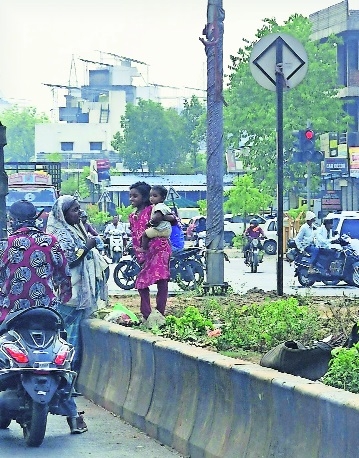
In Nagpur, a disturbing reality unfolds daily at busy traffic squares and intersections, where children can be seen working as ragpickers, vendors, windshield cleaners, or even beggars—often just metres away from police personnel and under the watch of CCTV cameras. Despite the visibility of this exploitation, enforcement remains strikingly absent. The Child Labour (Prohibition and Regulation) Act, 1986 clearly prohibits the employment of children in hazardous conditions and regulates their work, yet its spirit seems ignored in plain sight. As discussions emerge around anti-child labour observances such as World Day Against Child Labour—and even local awareness efforts marked on dates like April 30—the contrast becomes even more stark.
At several junctions, it is also common to see women carrying newborn babies, appealing to commuters for money in ways that seem designed to evoke instant sympathy; in many cases, these infants are exposed to harsh weather, pollution, and unsafe conditions, raising serious concerns about their welfare and possible exploitation. While speeches, campaigns, and social media posts highlight the need to protect children, the lived reality at these intersections tells a different story. The silence of both law enforcement and some child welfare organisations raises uncomfortable questions about accountability and priorities. These children, instead of being in classrooms, are pushed into cycles of poverty and vulnerability, deprived not only of education but also of dignity and protection, while society continues to look away.