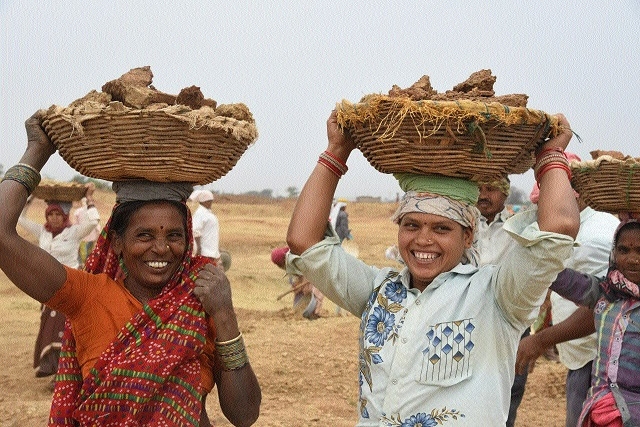
Women workers becoming economically, socially empowered
| Date :01-May-2026 |
RAIPUR :
THE International Labour Day, observed every year on May 1, holds particular significance in Chhattisgarh, as women’s
participation in the state’s economy continues to rise and their contribution is becoming increasingly impactful.
In rural areas, women have long been engaged in agricultural work, the collection of minor forest produce, tendu leaf plucking, and handicrafts. In urban centres, their presence has grown steadily in construction activities, domestic services, and small enterprises. This shift extends beyond employment, strengthening women’s social identity, independence, and role in decision-making.
At the same time, women workers in the unorganised sector have historically faced multiple challenges. Issues such as the lack of fair wages, unsafe working conditions, and the absence of social security have persisted. Wage disparities, limited access to healthcare, lack of maternity benefits, and traditional social attitudes have further restricted their progress.
Recognising these challenges, the state government has prioritised the empowerment of women workers. Under the leadership of Chief Minister Vishnu Deo Sai, labour policies have been strengthened to ensure minimum wages in the unorganised sector and to enforce workplace safety standards. Women Empowerment Centres have been developed as platforms for counselling, legal support, and employment guidance, while Sakhi One Stop Centres are providing immediate assistance and rehabilitation to women affected by violence.
Several schemes are contributing to improved safety and self-reliance among women workers. Under the Mini Mata Mahtari Jatan Yojana,
registered women construction workers receive financial assistance of Rs 20,000 after childbirth, reducing economic stress.
The Chief Minister Sewing Machine Assistance Scheme promotes self-employment, while the Construction Workers’ Safety Equipment Assistance Scheme enhances workplace safety.
Under the Mahtari Vandan Yojana, women receive Rs 1,000 per month, strengthening their financial stability. The Didi e-Rickshaw Assistance Scheme provides registered women construction workers aged 18 to 50 years, with at least three years of registration, financial support of up to Rs 1 lakh, enabling them to pursue self-employment. In addition, the National Rural Livelihood Mission is promoting self-help groups, providing women with income opportunities and strengthening leadership skills. State-run skill development programmes are equipping women workers with training and linking them to employment. Special initiatives are being implemented for domestic workers, contract labourers, and hamal families. The Saksham Scheme is also supporting widowed, abandoned, and divorced women in becoming self-reliant.
Today, women workers in Chhattisgarh are no longer confined to being part of the labour force; they are emerging as active participants in the state’s development. Their role now extends beyond support functions to involvement in decision-making processes. Increased awareness and improved access to welfare schemes have boosted their confidence and enhanced their social standing.
The initiatives undertaken for women workers in Chhattisgarh demonstrate that meaningful change is achievable through responsive policies and effective implementation. With enhanced access to safety, dignity, and employment opportunities, women workers are emerging as a strong pillar of the state’s development. This transformation reflects not only economic progress but also a broader shift towards social empowerment and awareness.