Vidarbha’s folk tradition losing ground to DJ, social media culture
| Date :12-May-2026 |
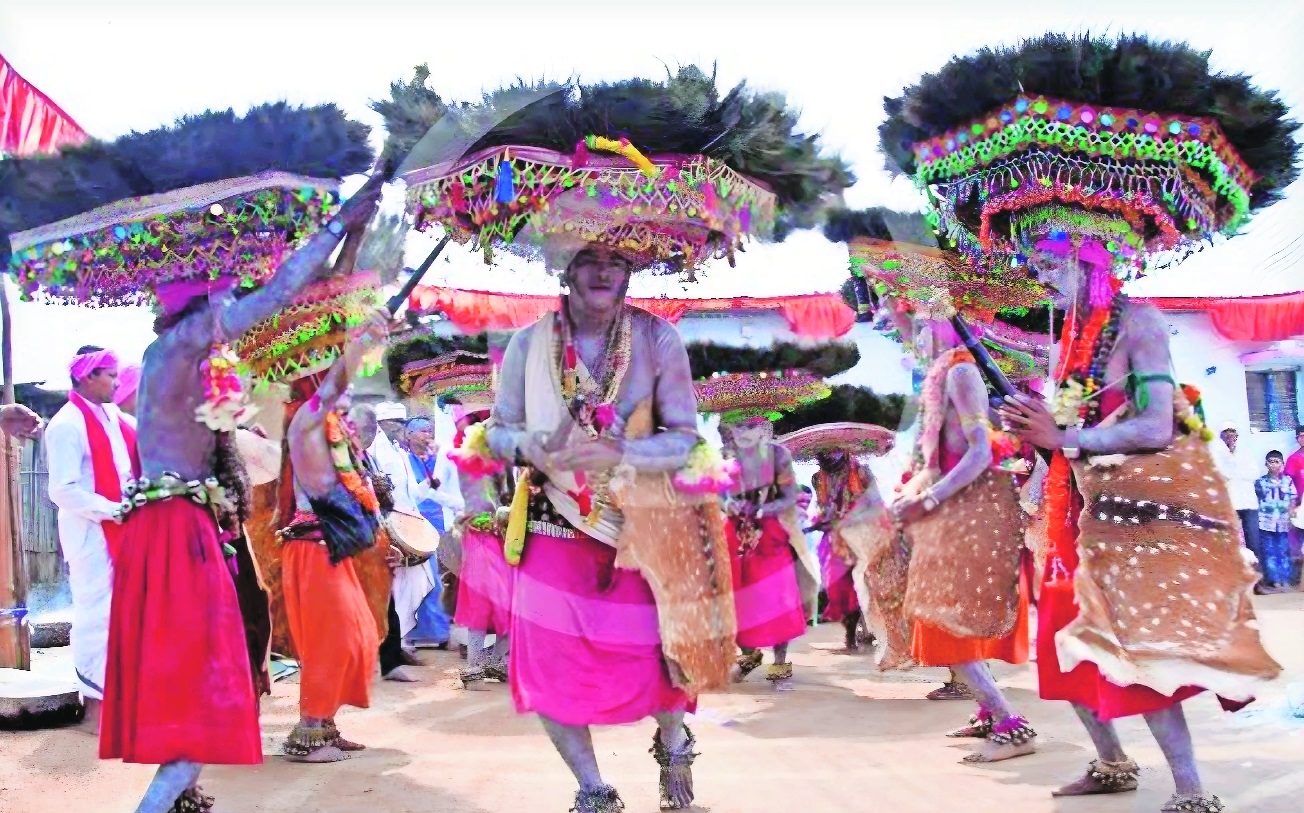
Dandar, a tribal theatrical tradition associated with Gond, Korku, and Pardhi communities.
By Simran Shrivastava :
Migration from villages to cities, shrinking community spaces, irregular financial support, and the absence of cultural education have further reduced participation in traditional art forms
Vidarbha’s traditional folk arts, which were central to community gatherings, harvest celebrations, weddings, and religious rituals across the region, are disappearing from public life. This is because DJ culture, Bollywood music, social media entertainment, and urban lifestyle have altered cultural preferences. From the tribal Gondi dances of Gadchiroli to the ritualistic Gondhal performances of Nagpur and the rural Zadipatti theatre tradition spread across eastern Vidarbha, practitioners and researchers said, indigenous performance traditions are struggling to retain audiences, performers, and social relevance.
One of the strongest examples of this transition is Zadipatti, the rural theatre tradition practised for nearly eight decades across Chandrapur, Gadchiroli, Bhandara, and Gondia districts. Rooted in the rice-growing belt of eastern Vidarbha, the form traditionally would turn open agricultural fields into makeshift theatres after harvest season, and performances would continue through the night. Sanjay Bhakre, Actor and Director, said that, Zadipatti evolved directly from agrarian life and combined drama, music, dance, humour, and social commentary to engage rural audiences.
The cultural roots of Zadipatti trace back to Dandar, a tribal theatrical tradition associated with Gond, Korku, and Pardhi communities and recorded in the National List of Intangible Cultural Heritage under the Ministry of Culture. Dr Ravindra Haridas, Principal, Natraj Art and Culture Centre, said that, despite its deep cultural significance, the form is now struggling to attract younger generation from within the communities themselves. He also pointed to Khadigammat, a Gavlan dance tradition performed exclusively by men and unique to Vidarbha, as another art form gradually fading from public memory.
Gadchiroli’s large tribal population, including Gond, Madia, Pardhan, and Kolam communities, has a history of wide range of indigenous dance traditions, which are now fading. MFA Sachin Dabhnekar, Folk Dance Choreographer and Founder, Shivaar Lokkala Sanskrutik Samajik Sanstha, described few of them. One is Rela, performed during auspicious occasions in honour of Persa Pen. Dhemsa is a mixed-gender group dance featuring co-ordinated circular formations accompanied by instruments such as dhol, tamak, changu, and mahuri.
Karma dance is also performed during Puja around the sacred Karam tree to the rhythm of the timki. Korku community preserves several distinct dance variations of its own. All of these now face declining participation.
Rahul Harde, Assistant Professor, Performing Arts, Sant Gadge Baba Amravati University, said Gondhal, a ritualistic folk performance staged during weddings and religious ceremonies, continues to survive in parts of the region, but has witnessed reduced interest in urban public life. The performance invokes deities such as Khandoba and Ambabai through storytelling, music, singing, and dance accompanied by instruments, including sambal, tuntune, and jhanj.
Artists and scholars said that, the reason of this decline is the changing entertainment habits and weakening intergenerational cultural transmission.
Villages would earlier gather massive overnight crowd for open-air performances after harvest season. But now, younger audiences are drawn more towards mobile phones, short-form social media reels, Over-The-Top (OTT) platforms, DJs at festivals and weddings, and commercially organised urban entertainment events. Migration from villages to cities, shrinking community spaces, irregular financial support, and the absence of cultural education have further reduced participation in traditional art forms.
Practitioners noted that, revival remains possible through documentation, inclusion of regional folk traditions in school curricula, financial and institutional support for performers, and wider public exposure through festivals and cultural platforms. They warned that, without preservation efforts, Vidarbha’s folk heritage could continue to disappear across generations. These traditions are not yet extinct, but they are being pushed to the margins as modern entertainment becomes more accessible and commercially dominant.