Maharashtra Cabinet clears pilot project to desilt 6 dams
Date :15-May-2026
MUMBAI :
THE Maharashtra Government on Thursday approved a pilot project to desilt six major irrigation reservoirs and provide the nutrient-rich silt to farmers at no cost while ensuring strict monitoring, said officials.
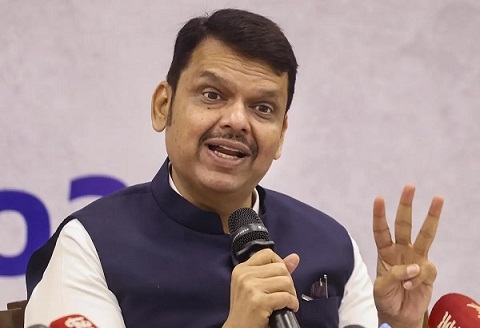
The decision, taken at a Cabinet meeting chaired by Chief Minister Devendra Fadnavis, is aimed at increasing water storage capacity in the dams, improving irrigation efficiency and enhancing soil fertility in agricultural fields, officials said.
The pilot project will be implemented at the Ujani (Bhima river-Solapur district), Girna (Girna river-Nashik), Gosikhurd (Wainganga-Bhandara), Mula (Mula-Ahilyanagar), Jayakwadi (Godavari-Chhatrapati Sambhajinagar) and Hatnur (Tapi river-Jalgaon) dams, an
official release said. Under this policy, irrigation development corporations will be empowered to execute the work.
Farmers will be allowed to take the excavated silt from these six dams to their fields without paying any royalty or ownership charges, bearing only transportation costs, the release said.
Contractors will not be permitted to extract only sand and will be required to remove both silt and sand. Excavation below two feet from the natural ground level will be prohibited. Tender periods will vary depending on the quantity of silt.
The policy mandates 24x7 CCTV surveillance of “sand stockyards, geo-fencing of storage areas, GPS devices on transport vehicles, and compulsory e-passes, barcoding and online records”, the release said.
The Government said all environmental clearances and approvals from State and Central authorities, including compliance with the Union Environment Ministry’s sustainable sand mining guidelines, will be mandatory.
In another decision, the Cabinet approved a revised organisational structure for the Soil and Water Conservation Department and sanctioned 8,767 posts, including 2,284 additional positions, to strengthen the department's field-level machinery.
It also decided that candidates from reserved categories who have availed of relaxations in age, educational qualifications, experience or number of attempts in examinations will henceforth be appointed only against reserved quota vacancies and will not be eligible to claim appointment to open category posts.
The Cabinet also decided to continue the ‘Sindhuratna Samruddhi Yojana 2.0’ for three more years in Sindhudurg and Ratnagiri districts to promote comprehensive development through better planning and utilisation of natural resources, said officials. A provision of Rs 49.26 crore was approved for the Amboli-Velunje diversion scheme project in Nashik district. The State Government approved an annual grant of Rs 10 lakh to Kusumagraj Pratishthan from 2026-27 under the Maharashtra State Literature and Culture Board’s scheme for assistance to literary institutions.
It also approved an exemption from stamp duty on land acquisition required for the Nashik Parikrama Marg project.
The Cabinet increased the concession in development charges for buildings of medical institutions from 25 per cent to 50 per cent through amendments to the Maharashtra Regional and Town Planning Act, 1966.
It approved amendments to the Maharashtra State Scheduled Tribes Commission Act, 2025 and the Maharashtra State Scheduled Castes Commission Act, 2025, to create the post of vice-chairperson in both commissions.
The Cabinet also approved the transfer of three government land parcels free of cost to the Pune Municipal Corporation for the Mula-Mutha River Rejuvenation Project. The Government scrapped the orange import duty reimbursement scheme under which exporters to Bangladesh were given a 50 per cent subsidy on import duty, saying the scheme was not benefiting farmers in the State. The Cabinet further approved senior and selection grade pay scales for higher secondary teachers in private aided residential Ashram schools for Vimukta Jati and Nomadic Tribes categories after completion of 12 and 24 years of regular service.