National Endangered Species Day today; State has only two Great Indian Bustards
| Date :15-May-2026 |
By Saniya Chakraborty :
GIBs survive only in vast open grasslands which are fast vanishing in Maharashtra, says Kishor Rithe, Director, BNHS.
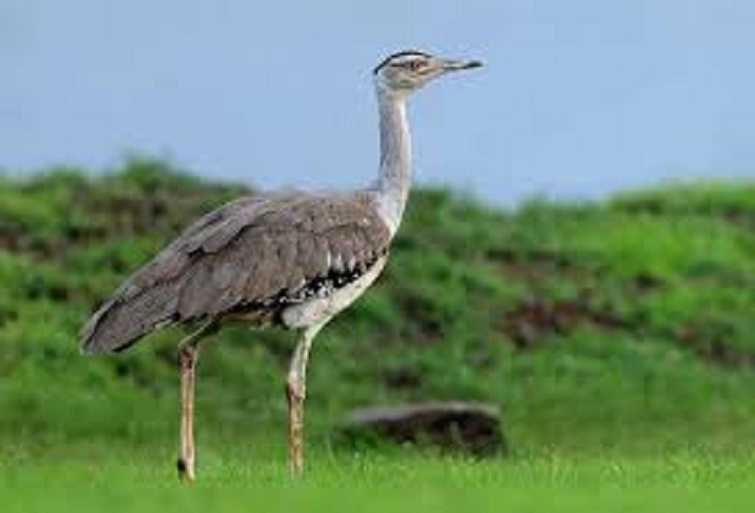
On the occasion of National Endangered Species Day, attention once again turns towards the critically endangered Great Indian Bustard (GIB), a bird now standing on the brink of extinction in India. Once commonly seen across the grasslands of central and western India, the species has now been reduced to less than 100 birds in the wild, according to the Bombay Natural History Society (BNHS).
“Nearly 98% of the surviving population is now confined to the desert grasslands of Jaisalmer in Rajasthan, making it the last major stronghold of the species. In Maharashtra, only two Great Indian Bustards are believed to have remained,” said Kishor Rithe, Director, BNHS to The Hitavada.
The bird was once sighted in parts of Vidarbha, including areas around Nagpur, Warora and Umred, where vast natural grasslands existed.
However, rapid urbanisation, shrinking grasslands and habitat destruction have erased its presence from most of Central India.
The GIB is listed as Critically Endangered on the International Union for Conservation of Nature (IUCN) Red List since 2011. It has been extirpated in 90% of its former range, and the population was estimated at perhaps fewer than 250 individuals in 2008. The main threats are hunting and habitat loss. In the past they were heavily hunted for their meat and for sport. Today, poaching of the species still continue, said Rithe. “GIBs can survive only in vast open grasslands, but today those grasslands are disappearing due to urbanisation, infrastructure projects and human intrusion, pushing one of the India’s rarest birds towards extinction.
Poaching is the major reason for the bird’s historical decline, while today power lines, infrastructure expansion and habitat fragmentation also threaten its survival. Due to its low breeding rate and need for large undisturbed grasslands, recovery has become increasingly difficult”, he lamented.
National Endangered Species Day should not remain symbolic, but serve as a warning about disappearing ecosystems. The decline of the Great Indian Bustard reflects the larger collapse of India’s grassland habitats, which remain among the country’s most ignored ecosystems. Without urgent protection and restoration measures, India risks losing one of its rarest and most iconic birds forever.