Op Sindoor reflected India’s ‘smart power’: Army chief
| Date :20-May-2026 |
NEW DELHI :
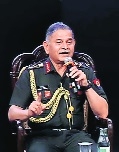
UNDER Operation Sindoor, Indian forces dismantled terror infrastructure, punctured a long-standing strategic assumption, and then stopped “deliberately and purposefully”, and it reflected “smart power” in its most complete expression, Army chief General Upendra Dwivedi said on Tuesday.
In his address at a seminar hosted at the Manekshaw Centre here, he also said that twelve months ago, India offered the world a “partial answer” to the so-called smart power question.
“On the intervening night of May 6-7 in 2025, Bharat acted. In a precisely defined 22-minute operation window, Operation Sindoor delivered military precision, information control, diplomatic signalling and economic resolve, as one coherent national act. We struck deep, dismantled terror infrastructure, punctured a long standing strategic assumption, and then stopped, deliberately and purposefully,” the Army chief said
“The deliberate thought after 88 hours, was smart power in its most complete expression, knowing exactly which instrument to apply, at what intensity, and precisely when to convert a military moment into a strategic one,” he asserted.
The seminar, titled, ‘Security to Prosperity: Smart Power for Sustained National Growth’, hosted by defence think-tank Centre for Land Warfare Studies (CLAWS), was attended by senior military officials, various retired Army officers and representatives from several countries. General Dwivedi said today, the “world around us is sending a more complex signal -- disorder, distrust, and dichotomy in alliances”.
“We were promised a world where prosperity would make power politics obsolete... Instead, we have a world where power politics is being used to reorganise prosperity,” he argued.
In his address, he asked the audience if smart power is the “defining currency” of sustained national growth, or has the “raw calculus of hard power”, once again reclaimed the centrestage of the global order. But to answer it, one must first read the world as it is, not as one wishes it to be, the general officer cautioned.
“The 21st century opened with a confident thesis that forces of trade, supply chains, additional connectivity, would make nations too interdependent to conflict. Paradoxically same forces that promised binding nations together, have progressively become instruments of coercion,” the Army chief said.
“Semiconductors and their selective availability have become tools for hedging. The Strait of Hormuz has become a zone of active contestation. Global defence spending has crossed USD 2.7 trillion, exceeding the entire UN budget for Sustainable Development Goals,” he added.
The boundary between security and prosperity, is “no longer a boundary” at all. Contemporary conflicts now impose sustained demands, not only on Armed Forces, but also on industrial production, research systems, and governance structures, the general officer underlined.
General Dwivedi in his address emphasised that security is no longer a cost that prosperity must bear, it is the pre-condition for prosperity to commence its progressive journey.
“So in this world, fractured, fast moving, and unforgiving, what must be the architecture of India’s smart power. He cited Joseph Nye, who gave the concept of smart power -- describing it as the strategic intelligence to know which instrument to deploy, with what intensity and towards what end.
“For India, it means, using national strength with strategic wisdom to secure peace, accelerate growth, and shape the global environment in our favour,” General Dwivedi said.
In his address, the Army chief offered a moniker of ‘SMART’ and explained what each components of it stood for, and how it can help as a strategic design to navigate the present geostrategic landscape.