NGT approves 6-lane Ayodhya Bypass expansion, Project involves felling of 7,871 trees; NHAI mandated to plant 80,000 saplings as compensatory measure
Date :22-May-2026
Staff Reporter :
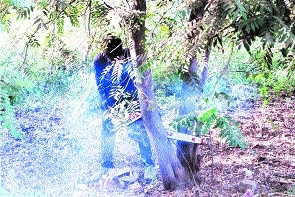
The Principal Bench of the National Green Tribunal (NGT) in New Delhi has delivered a significant verdict regarding infrastructure development in Bhopal. The bench, led by Chairperson Prakash Srivastava, Judicial Member Shiv Kumar Singh, and expert members A Senthil Vel and Sudhir Kumar Chaturvedi, has granted conditional approval to the National Highways Authority of India (NHAI) to fell 7,871 trees for the 6-lane expansion of the 16.5-kilometre stretch from Asharam Tiraha to Ratnagiri Tiraha on the Ayodhya Bypass. The tribunal acknowledged that this infrastructure project of national importance is necessary in the public interest, provided that environmental safety measures and regulatory compliances are strictly followed.
This matter originated following a petition filed by an environmentalist. The petitioner had registered a formal objection with the Tree Officer of the Bhopal Municipal Corporation, opposing the public notice issued by the NHAI on April 25, 2025, regarding the felling of 8,000 trees. During the proceedings, the petitioner presented a scientific study titled ‘Land Surface Temperature Variations: Case Study Bhopal,’ which certified the vital role of dense roadside trees in regulating urban temperatures. Citing the temperature variance between the Kolar area (44 degrees Celsius) and Char Imli (36 degrees Celsius), the petition requested the cancellation of the project or the consideration of alternative routes such as elevated corridors.
In its argument before the tribunal, the NHAI presented substantial data demonstrating that the existing two-lane bypass currently faces a daily pressure of 42,748 Passenger Car Units (PCU), against a capacity of only 40,000 PCU. This traffic volume is projected to reach 67,288 PCU by the year 2030, making the route a hotspot for severe traffic congestion and accidents. According to the NHAI, this project, valued at 836.91 crore rupees, will connect NH-46 and NH-146, significantly easing travel between Gwalior, Jabalpur, Indore, and Raisen. Furthermore, it will eliminate three major accident-prone blackspots: Best Price Tiraha and Ratnagiri Tiraha. The role of the high-level Central Empowered Committee (CEC), constituted by the Madhya Pradesh Government on September 1, 2025, proved decisive in this sensitive case. In the first meeting held on September 15, 2025, the CEC issued strict instructions to the NHAI to minimise the felling of trees. In compliance, the highway authority redesigned the route, reducing the median width from 5 meters to 1.5 meters and entirely removing the concrete utility ducts previously planned for both sides of the road. This redesigning reduced the number of trees to be felled from 9,888 to 7,871, directly saving 2,017 mature trees.
The CEC granted the final conditional approval in its meeting on December 12, 2025.
Of the 7,871 trees to be felled, 5,188 are of highly valuable timber species, including Teak, Sheesham, Sal, Mahua, Pine, Mango, and Neem. The remaining 2,683 trees consist of non-timber species, primarily Bamboo and Banana. According to records presented by the NHAI, these trees were planted as ‘avenue plantations’ following the acquisition of the land in 1972. The primary objective of planting these trees was to accommodate future road expansion requirements, and these trees are now between 40 and 80 years old.
To compensate for the environmental damage, the NGT has imposed the strictest condition of ten-fold compensatory afforestation, requiring the NHAI to plant 80,000 new saplings. Under the NHAI’s plan, 10,000 shade-bearing and fruit-bearing trees will be planted along both sides of the Ayodhya Bypass route. The remaining 70,000 saplings will be planted to develop dense forest areas on 85 hectares of identified revenue forest land in the Jhirnia and Jhagaria Khurd regions of Bhopal, for which a No Objection Certificate (NOC) has been obtained from the administration. Each sapling must be at least 6 feet tall at the time of planting, and the NHAI will be solely responsible for their maintenance and survival for the next 15 years.
In its legal conclusion, the tribunal clarified that since the project length is 16.5 kilometres, it is exempt from obtaining Environmental Clearance (EC) under the Ministry of Environment, Forest and Climate Change notification dated July 14, 2022. Previously, the Madhya Pradesh High Court had ordered on December 17, 2025, that the felling of trees could only commence after final approval from the CEC. Citing the Supreme Court’s verdict in the famous Mumbai ‘Aarey Forest’ case delivered on July 29, 2025, the NGT stated that development and the environment must progress together as complements of each other.
The NHAI informed the court that construction work could not commence from August 11, 2025, due to the stay on tree felling, as per the concession agreement signed on January 27, 2025. Consequently, the construction agency has been incurring a penalty of 8,36,910 rupees per day, which has cumulatively exceeded 5.43 crore rupees. Additionally, the NHAI has already spent approximately 15 crore rupees of public funds on the project’s Detailed Project Report (DPR), tendering processes, and consultancy fees. The court observed that such waste of public funds and excessive delay in the project is not in the public interest.
While granting approval, the NGT has issued several stringent technical instructions to the NHAI. These include strict adherence to the Madhya Pradesh Protection of Trees (Urban Area) Act 2001 and the National Green Highways Policy 2015.
The entire plantation process and the utilisation of the deposited Compensatory Afforestation Fund Management and Planning Authority (CAMPA) funds will be monitored for the next 15 years by a joint technical committee comprising the Forest Department, Municipal Corporation, Horticulture Department, and the State Pollution Control Board. Help from non-governmental organisations will be sought to safely relocate bird nests during the tree felling process. Furthermore, instructions have been given to use maximum fly ash in construction work and to use only treated water from Sewage Treatment Plants (STP) for dust control. Under the same high-level decision, the Central Empowered Committee has also granted conditional permission for the Bhopal Metro Rail Project (MPMRCL) to fell a total of 668 trees. Of these, 487 trees will be removed from the Metro alignment route between Bhadbhada and Ratnagiri, and 181 trees will be removed from the ‘cut-and-cover’ construction area of the underground metro. As a compensatory measure, the metro administration must plant 6,680 saplings and deposit the entire cost of their 15-year maintenance with the Municipal Corporation in advance. Furthermore, the Metro Corporation has been entrusted with the responsibility of planting and developing an additional 10,015 saplings separately within its depot premises.