SMART project boosts rural network, jobs in Nagpur distt
| Date :22-May-2026 |
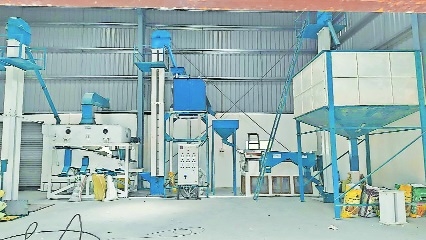
Cleaning-Grading unit completed under the SMART project in Uparwahi, Kalmeshwar.
By Rohit Pawar :
- FPCs move from trading to value-added processing
- However, they express true satisfaction will come after units get self-sustainable financially
The SMART (State of Maharashtra’s Agribusiness and Rural Transformation) Project is steadily transforming the rural agricultural economy in Nagpur District by helping Farmer Producer Companies (FPCs) build agri-processing infrastructure, improve storage facilities and generate local employment. A total of 14 projects have been undertaken in the district under the SMART scheme. Of these, seven projects in Ramtek, Saoner, Parseoni, Kalmeshwar and Mouda talukas have already been completed and are operational. The completed units are located at Masla, Hamlapuri, Bhandarbodi, Badegaon, Borda, Uparwahi and Chacher villages.
The projects include rice mills, storage godowns, fruit cleaning and grading units, cold storage facilities, grain cleaning centres, chilli processing units and cotton ginning and pressing facilities aimed at improving the agricultural value addition and reducing post-harvest losses.
Under the 14 projects, nearly 10,000 metric tonnes of storage capacity has been proposed, of which around 5,000 metric tonnes is already readied. Officials said the godowns are helping farmers store produce locally, protect grains from unseasonal rains and reduce dependence on private warehousing.
Employment
generation
Officials said the completed projects have become an important source of rural employment. Each operational unit has employed around 10 to 15 permanent workers, including machine operators, technical staff and labourers engaged in loading, unloading and material handling work.
During peak agricultural seasons, employment in some units rises to nearly 25 workers depending on workload.
Most workers employed belong to the same villages where the projects are located. The construction phase had also generated work for around 10 to 15 labourers at each site.
End-to-end guidance for the projects was provided by Dr Archana Kadu, Project Director, ATMA and SMART Cell, Project Coordination and Management Unit (PCMU), Pune.
From traders to processors
Speaking to The Hitavada, Swapnil Bhojraj Mate, Director, Antarang Vidnyan Farmer Producer Company Ltd, which operates a rice mill, cleaning and packaging unit worth Rs 3.2 crore, said the project had improved opportunities for both farmers and rural youth. “It has been eight months since our unit became operational. During peak periods, the project provides employment to nearly 25 people from our village and directly benefiting 10000 farmers in the region. Initially, profits were slow because we were new in the market, but they are now growing steadily,” he said.
Mate said farmers are now paid upfront for their produce and no longer need to transport grains to Agricultural Produce Market Committees (APMCs).
“Earlier, we were mainly traders. The SMART project has helped us become processors, enabling us to earn better profits by selling quality rice even outside Maharashtra,” he added.
Strong funding
support
According to official figures, projects worth more than Rs 32.47 crore have been approved in Nagpur district under the SMART scheme, with grant assistance of over Rs 16.14 crore provided to beneficiary FPCs.
Nearly 60 per cent of the total project funding is being provided through Government support. Of this assistance, around 70 per cent is funded by the World Bank, 27 per cent by the Maharashtra Government and the remaining 3 per cent through Corporate Social Responsibility (CSR) funds.
Farmer groups associated
with the scheme said the initiative has enabled them to create infrastructure that would otherwise have been financially
difficult to establish independently, while also opening up opportunities in organised processing, storage and agricultural marketing.
However, some FPC representatives said the real sense of satisfaction would come only after the units become financially self-sustainable through stable profits and repayment of loans linked to the projects.