Heatwave reality missing from records? NMC’s 81-case count under scanner
| Date :25-May-2026 |
By Kabir Mahajan :
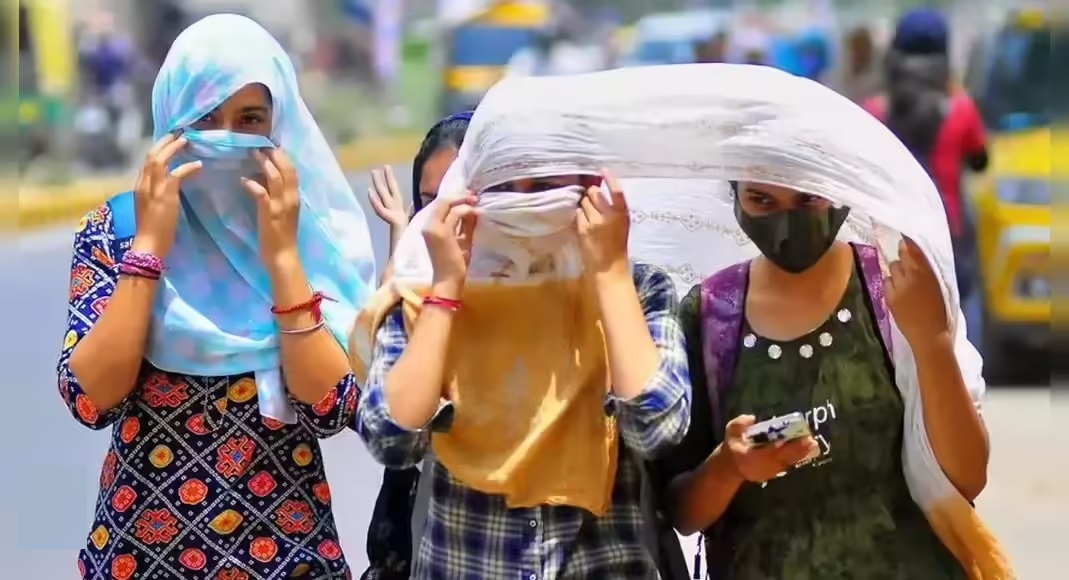
Nagpur is reeling under a severe heatwave, with temperatures soaring to 46.6 degrees Celsius and daily life becoming increasingly difficult for residents. Despite the intense conditions, the Nagpur Municipal Corporation (NMC) has recorded only 81 cases of heat-related illnesses so far this season. The figure has raised questions about whether the city’s official data is capturing the true extent of the heatwave’s impact on public health.
For a city of nearly 40 lakh people enduring weeks of intense heat, the figure appears unusually low. The NMC says the data has been collected from its network of around 150 healthcare facilities, including Urban Primary Health Centres (UPHCs), Urban Health and Wellness Centres (UHWCs), municipal hospitals and Aapla Dawakhana units.
However, experts believe the actual impact of the heatwave could be far greater.
A large number of residents seek treatment at private hospitals, nursing homes and local clinics, which are not currently included in the civic body’s data collection process.
Public health specialists argue that relying solely on NMC-run facilities may present only a partial picture of the situation. They have urged the civic administration to gather daily reports from all hospitals - both public and private - to better understand the extent of heat-related illnesses and emergencies across the city.
Accurate and comprehensive data is crucial for planning and implementing an effective Heat Action Plan, experts say. Without a clear understanding of how many people are actually being affected, authorities may struggle to put the right preventive measures and emergency responses in place.
Experts also point out that broader data collection could help policymakers assess the long-term effects of rapid urbanisation, increasing concrete surfaces, shrinking green cover and rising temperatures. Such information would offer valuable insights into how changing city landscapes are affecting public health.
Dr Deepak Selokar explained, “We call for the data from the private institutions every year if needed, specifically for the diseases, for instance recently we compiled the data regarding dengue and malaria. NMC tries to compile the statistics but sometimes we also might miss few institutions or private hospitals data.”
This fragmented approach raises serious questions about how the administration will draft an effective and comprehensive Heat Action Plan (HAP) for next year without an accurate assessment of the city’s actual caseload and worst-affected areas.
HAP relies heavily on identifying precise socio-economic vulnerabilities, localised microclimate pockets, and affected demographics to deploy resources effectively. Without institutional integration of all medical cases, next year’s preventative measures risk being fundamentally skewed.
According to the localised data compiled by the NMC from March 1 to May 21, 2026, a total of 81 HRI cases have been officially registered across the city’s municipal zones. A geographic bifurcation reveals that the Mangalwari Zone leads the chart with 29 cases, followed closely by the Dharampeth Zone with 21 cases and the Satranjipura Zone with 20 cases.
In contrast, Hanuman Nagar recorded 9 cases, while Laxmi Nagar and Nehru Nagar registered just 1 case each. Experts point out that these figures likely represent only a fraction of the actual crisis, as a vast majority of the working-class population and elite class resort to private practitioners or apex government hospitals when hit by severe heat stress.
When questioned about this missing statistical link, an official from the NMC, Health Department, explained the current administrative framework, “Our current numbers act as a sample observation at municipal facilities where over 3.48 lakh screenings has been recorded till May 21. Every year NMC tracks the number of HRI cases across city from March 1 to June 30.
The data compiled during the examination of HRI cases helps us track the general trend of how heat is affecting the citizens.”
“While we have activated 11 specialised cold wards across major centres, private hospitals and external state institutions only notify us if a critical patient or a confirmed heatstroke death specifically lands at their doorsteps. For next year’s layout, analysing these trends and gaps will be vital to enhancing public adaptation and early warning systems across vulnerable zones,” official added.