NIA chargesheet reveals abuse of AI platform for ‘terror engineering’
| Date :25-May-2026 |
By Ashwini Shrivastava :
NEW DELHI
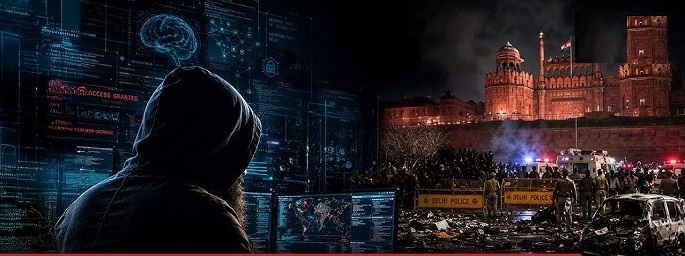
THE National Investigation Agency (NIA) probe into the Red Fort area car blast case in Delhi has found that a chargesheeted accused, linked to an offshoot of global terrorist outfit Al-Qaida, allegedly misused an AI platform for “terror engineering”, official sources said on Sunday.
They said the accused persons had also made rocket Improvised Explosive Devices (IEDs) and tested them in the Qazigund forest in Jammu and Kashmir’s Anantnag district.
The glaring findings are part of a voluminous 7,500-page chargesheet filed by the NIA on May 14 in connection with the high-intensity vehicle-borne IED blast that rocked the national capital on November 10 last year.
The chargesheet, submitted before a special NIA court here, details what officials described as a meticulous, “almost laboratory-grade” approach adopted by the accused pin the fabrication and use IEDs. One of the charge-sheeted accused emerged as the “in-house engineer” of the Ansar Ghazwat-ul-Hind (AGuH) interim terror module, linked to Al-Qaida in the Indian Subcontinent (AQIS).
AQIS and all its offshoots have been notified as terrorist organisations by the Ministry of Home Affairs.
The accused, Jasir Bilal Wani, had stayed at the Al Falah University campus in Faridabad, Haryana, on two to three occasions during 2024-25 to provide “technical support” for the conspiracy, the chargesheet said.
The University’s role came under the scrutiny of law enforcement agencies after the probe revealed that three doctors employed there were allegedly involved in the blast.
Jasir was introduced to Dr Umer un Nabi, another key accused and the driver of the explosive-laden car, by Dr Adeel Ahmed Rather. The explosion had resulted in the death of 11 people and left several others injured, according to the chargesheet.
The NIA findings state that Adeel was instrumental in supplying IED ingredients, including powdered sugar and potassium nitrate in the form of NPK fertiliser, to Jasir, while Dr Umer is said to have conducted research on improvised rocket IEDs and provided guidance.
The chargesheet brings on records that Jasir had turned to YouTube and ChatGPT, searching for “how to make a rocket and in what proportion should the mixture be”, highlighting the alleged misuse of digital and AI platforms for terror engineering.
Jasir allegedly prepared rocket IEDs and tested them in the Qazigund forest along with Dr Umer, Dr Muzammil Shakeel, and other co-accused, the chargesheet mentions.
Remnants of the devices were recovered from deep inside the forest by NIA teams during extensive field investigations based on disclosures made by Jasir.