Vet teams treat two tigers at Kanha Tiger Reserve
Date :25-May-2026
Staff Reporter :
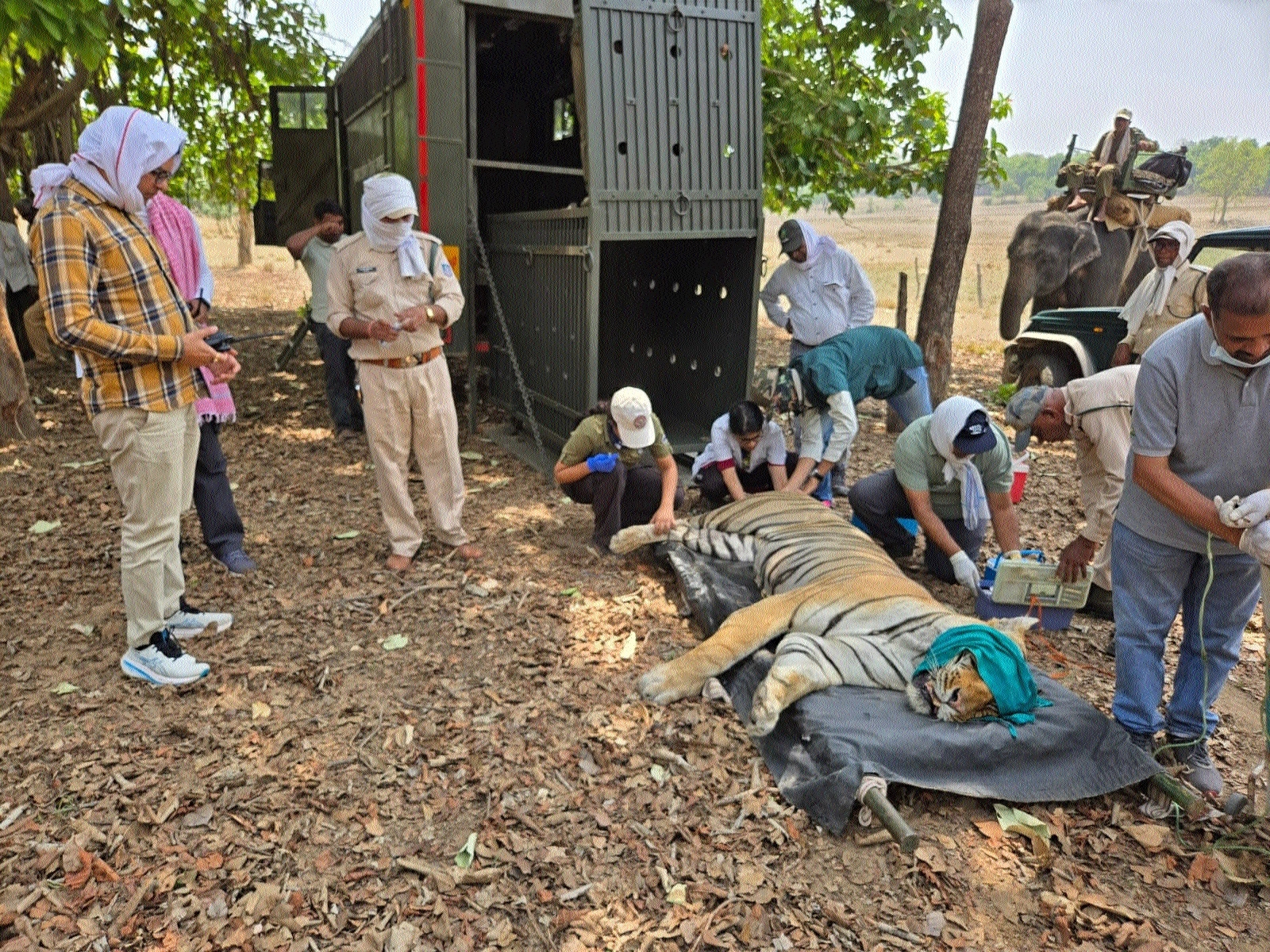
Two major wildlife health monitoring and treatment operations were successfully conducted in the Kanha Tiger Reserve, where expert veterinary teams carried out medical examinations and treatment
of two male tigers, identified as T-159 and T-125, under scientific protocols.
The first case was reported from the Sonf Beat area of the Sarhi range, where forest staff observed signs of injury, limping, and lethargy in around 7–8-year-old tiger T-159. Acting promptly, Kanha management deployed a specialist veterinary team for examination. During the health assessment, doctors found an old injury and superficial wounds on one of the tiger’s claws, which were already in the healing stage. Necessary medicines and supportive treatment were administered and after the tiger’s condition was found to be satisfactory, it was released back into its natural habitat.
The second case involved approximately 8-year-old tiger T-125 in the CN-165 Minkur Anicut area of Gaydhar Beat under the Mukki range. Forest staff had reported lethargy and limping in the tiger. The expert team safely tranquilised the animal and collected biological samples for testing. Preliminary investigations, including tests for Canine Distemper Virus (CDV) and other viral infections, returned negative results. Officials stated that the tiger’s overall physical condition was found to be satisfactory during examination. After treatment and observation, the tiger was safely released back into the forest.
In both cases, rapid antibody tests were conducted to detect CDV and other infections, and the initial reports were negative.
Biological samples collected during the operations have been sent to the SWFH
laboratory in Jabalpur for detailed examination.
The entire operation was conducted under the guidance of the expert committee constituted by the Principal Chief Conservator of Forests (Wildlife), Madhya Pradesh. The
team included specialists from SWFH Jabalpur, WCT Bhopal, Van Vihar Bhopal and wildlife health experts, forest officials and rescue personnel from Kanha Tiger Reserve.
Officials of Kanha Tiger Reserve said that regular wildlife health monitoring, scientific testing and timely
treatment form an essential part of conservation management. Such continuous monitoring and treatment initiatives play a significant role in ensuring the long-term conservation of tigers and other wildlife species.